30 October 2017 — Food for thought
Sent 30 October 2017. Part of Little Blue Letter.

"The health of our oceans is under threat.
They’re changing at a faster rate than ever before in human history."
~ David Attenborough
They’re changing at a faster rate than ever before in human history."
~ David Attenborough
Small favour: If you are enjoying Little Blue Letter, please share with friends & colleagues, and help us grow into a slightly-less-little letter. Are you a young ocean leader? Sign up to curate the newsletter for a week.
Before the boring bits, let me say this: Blue Planet II is truly awesome. The first episode, was a masterclass in science and cinematography. If you are in the UK, make BPII your Sunday evening ritual; if you aren't in the UK, you can still see the stunning trailer, check out some clips, and listen to the accompanying podcast. The BBC has also setup a website giving some conservation pointers to those inspired by the show.
The Convention on Migratory Species wrapped up last week in Manila - the largest meeting in its 38-year history. A record number of commitments were made; three species of shark and three species of ray will receive greater protection. The Philippines was commended for its efforts to protect whale sharks, which are essential to livelihoods in the region.
Things moved more slowly in London, where the International Maritime Organisation (IMO), "made progress in starting to shape a draft initial IMO greenhouse gas strategy". The aim is to reach consensus at the next meeting and to agree short-term measures between 2018-2023. Hardly groundbreaking, but it's a start.
A couple of weeks back, a shocking photo of plastic pollution in Honduras made the rounds online. Following a flurry of social media attention, the President of Honduras has appointed a task force and Guatemala, from where most of the litter comes, committed $2 million to building a 'waste-trap' to stem the flow. In the meantime, Honduras is asking for compensation. Perhaps we need an international agreement on marine plastic pollution?
Gif of the week
#OceanOptimism
The Labor government of Queensland, Australia has banned the loading of coal ships at sea in the Great Barrier Reef marine park. Capturing just 2% of the planet's wind energy would meet all our energy needs. Hi-tech tools could prevent whale collisions. Tuna are not radioactive.
Food for thought
What if dolphins got Alzheimer's? What if we treated whales as stakeholders?
Little ocean action
Greenpeace wants to file a lawsuit challenging oil drilling in the Arctic. Sign their petition, which will be used in court as evidence of the growing movement against arctic oil.
Periodic self-care reminder
Little Blue Letter is a splash of uplifting ocean stuff, lovingly curated by young ocean leaders and shipped straight to your inbox every Friday. Pass it on, encourage other ocean lovers to sign up, and follow along on Twitter.
Before the boring bits, let me say this: Blue Planet II is truly awesome. The first episode, was a masterclass in science and cinematography. If you are in the UK, make BPII your Sunday evening ritual; if you aren't in the UK, you can still see the stunning trailer, check out some clips, and listen to the accompanying podcast. The BBC has also setup a website giving some conservation pointers to those inspired by the show.
The Convention on Migratory Species wrapped up last week in Manila - the largest meeting in its 38-year history. A record number of commitments were made; three species of shark and three species of ray will receive greater protection. The Philippines was commended for its efforts to protect whale sharks, which are essential to livelihoods in the region.
Things moved more slowly in London, where the International Maritime Organisation (IMO), "made progress in starting to shape a draft initial IMO greenhouse gas strategy". The aim is to reach consensus at the next meeting and to agree short-term measures between 2018-2023. Hardly groundbreaking, but it's a start.
A couple of weeks back, a shocking photo of plastic pollution in Honduras made the rounds online. Following a flurry of social media attention, the President of Honduras has appointed a task force and Guatemala, from where most of the litter comes, committed $2 million to building a 'waste-trap' to stem the flow. In the meantime, Honduras is asking for compensation. Perhaps we need an international agreement on marine plastic pollution?
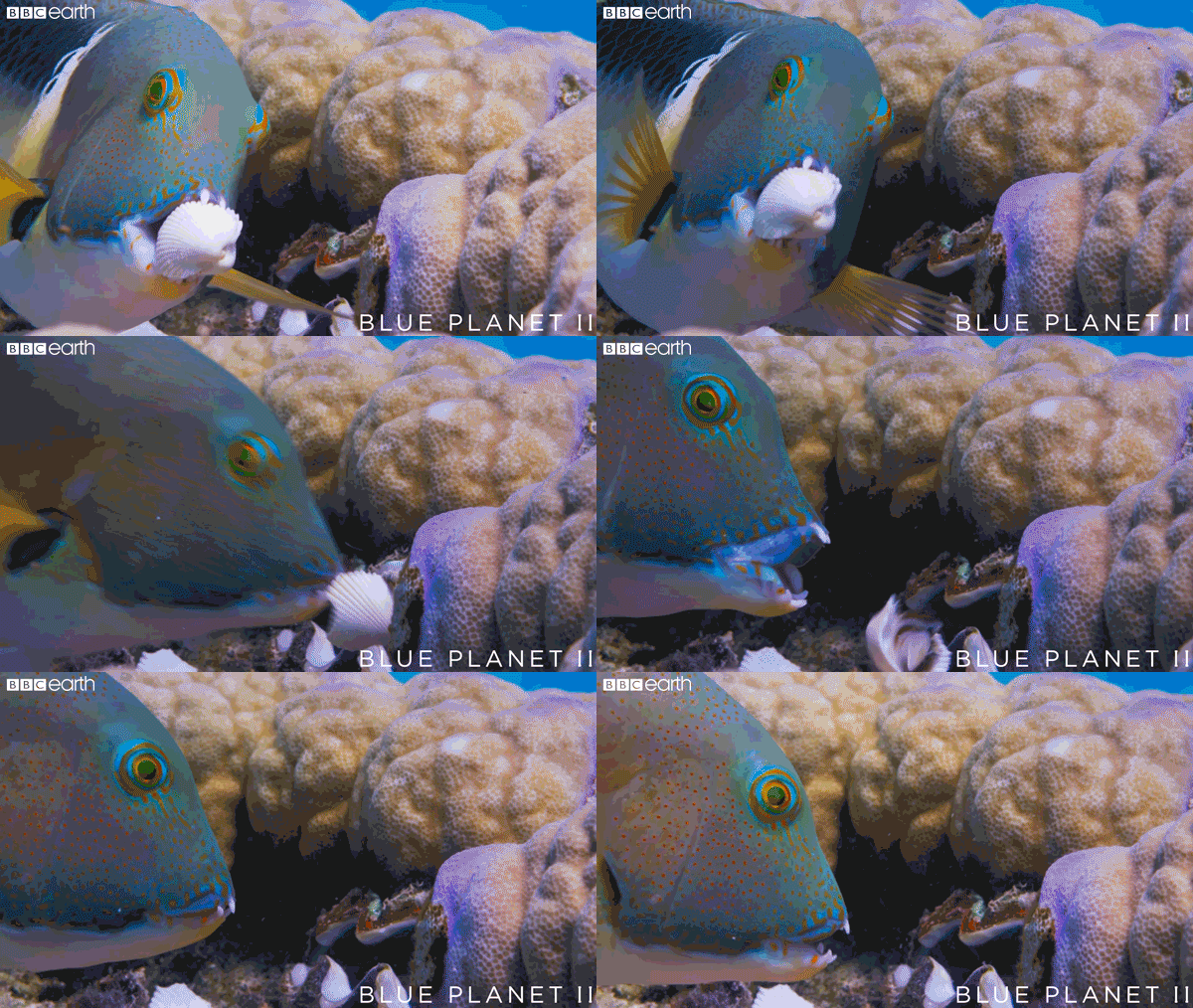
Gif of the week
An orange-spotted tusk fish breaks open a clam against a piece of coral to get its dinner.
#OceanOptimism
The Labor government of Queensland, Australia has banned the loading of coal ships at sea in the Great Barrier Reef marine park. Capturing just 2% of the planet's wind energy would meet all our energy needs. Hi-tech tools could prevent whale collisions. Tuna are not radioactive.
Food for thought
What if dolphins got Alzheimer's? What if we treated whales as stakeholders?
Little ocean action
Greenpeace wants to file a lawsuit challenging oil drilling in the Arctic. Sign their petition, which will be used in court as evidence of the growing movement against arctic oil.
Periodic self-care reminder
Artist: galina
Little Blue Letter is a splash of uplifting ocean stuff, lovingly curated by young ocean leaders and shipped straight to your inbox every Friday. Pass it on, encourage other ocean lovers to sign up, and follow along on Twitter.
Enjoy Reading This Article?
Here are some more articles you might like to read next: