11 January 2018 — It's getting hot in here!
Sent 11 January 2018. Part of Little Blue Letter.

Man marks the earth with ruin, but his control stops with the shore.”
~ Lord Byron
After more than a decade of debate and discussion, the Member States of the UN passed a resolution on Christmas eve to begin formally negotiating a treaty for the high seas (i.e. the vast marine areas that lie beyond the national jurisdiction of any one country). The high seas cover almost half the planet and reach depths of up to 7 miles. They are full of life, from unique and emblematic species to the plankton that provides the building blocks for marine ecosystems. The high seas also produce around half of the oxygen we breathe and regulate the climate.
 This important global commons is currently governed by a fragmented and complex patchwork of different agreements and institutions, and effective management and protection of marine biodiversity has proven almost impossible. Over the next two years, governments will discuss the elements of a "Paris Agreement for the Ocean", which could allow us to designate marine protected areas and require environmental impact assessments to be undertaken for activities on the high seas.
 With highly divergent views on a range of issues, reaching consensus is likely to be challenging. What conservation measures will be available? How will the agreement integrate with existing regulations? Who will the decision makers be? How will management be conducted? What kind of monitoring mechanisms will be implemented? How can we ensure that protections are not only designated, but actually bring conservation benefits on the water?
The first installment of the intergovernmental conference (IGC) to negotiate the treaty will be held in September 2018 at UN headquarters in New York, with three further meetings scheduled through to mid-2020. You can see a timeline of the process to date here, and a detailed analysis here.
It's getting hot in here!
Ambient temperature influences the gender of a sea turtle during the egg’s incubation period: cooler environments produce more males, while warmer conditions result in more females. This is not uncommon among reptiles, and can be a boon for struggling populations as warmer years provide more breeding females. However, consistently warm temperatures could have disastrous affects on the gender balance, and one of the world’s largest sea turtle colonies may now under threat because there aren’t enough males to go around.
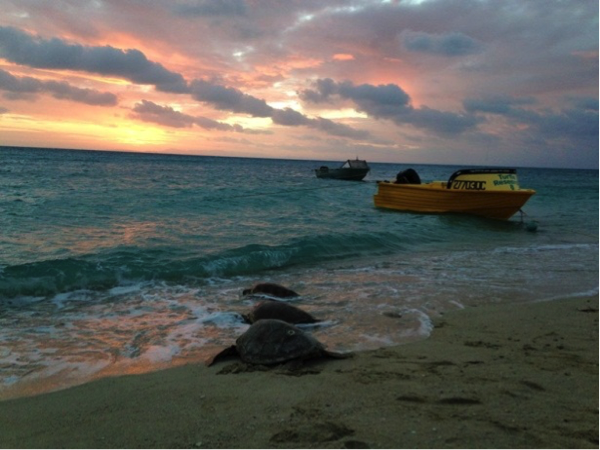 Almost all of the green turtles born in parts of the northern Great Barrier Reef since the late 1990s have been female, according to a new study. Taking blood and skin samples from 411 turtles at offshore foraging grounds, researchers analysed genetic and endocrine data for each turtle. This novel approach allowed precise identification of the beach where each turtle was born and its the sex (without killing and dissecting them, which is the conventional method).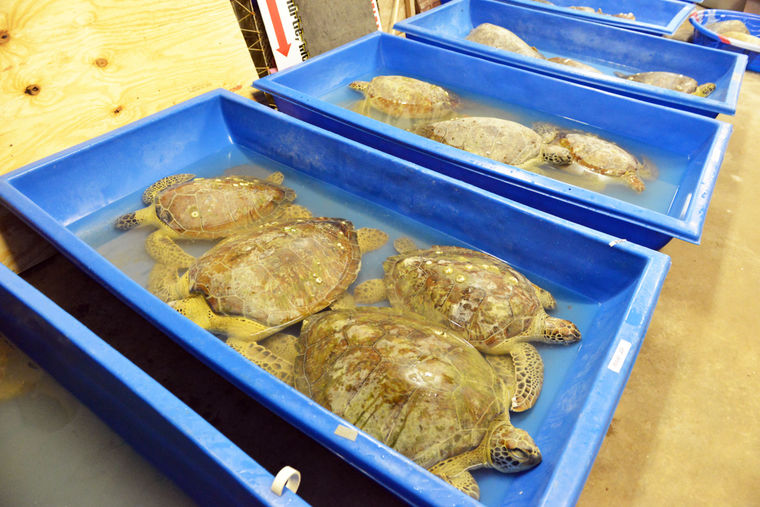
Elsewhere, it is cold weather causing confusion for turtles. Because turtles are unable to regulate their body temperature when the water drops below 10ºC, they become paralysed and unable to swim. They then float to the surface, where they are vulnerable to boat strikes and predation. More than 850 stunned sea turtles have been brought to a Florida facility since a cold snap began last week, while 300 were released back into the ocean on Monday off the shores of South Padre Island in Texas.
Cold-stunned Atlantic green sea turtles were housed in a warm safety room at a Sea Turtle Inc. facility on South Padre Island, ready to be released once it warms up. ©Miguel Roberts
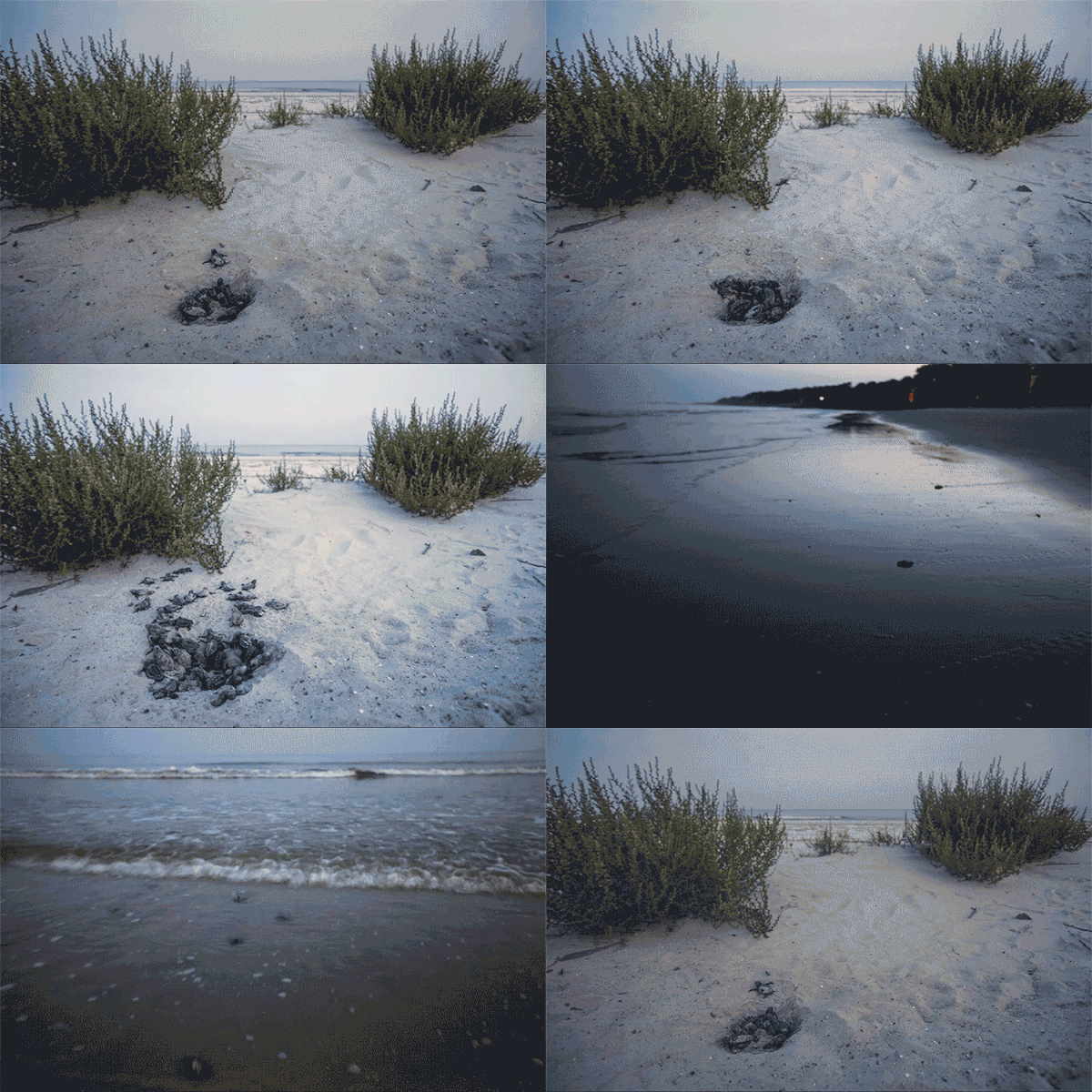
Gif of the week
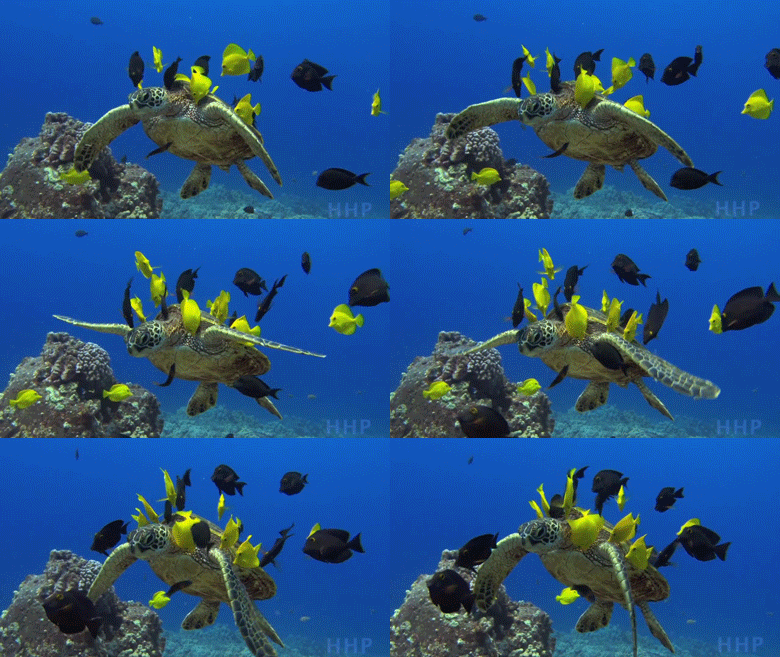 A free spa, no appointment needed!
 Fun and games
- Take a plunge into one of the world's best dive sites with this virtual reality 360° YouTube video (move your mobile or click and drag to look around).
- Help crowdfund World Ocean Explorer, an awesome interactive game designed to get kids excited about our ocean.
Ocean opportunities
- The Ocean Solutions Accelerator: a startup development and executive leadership course for budding ocean entrepreneurs.
- A summer internship looking after marine mammals in Maine.
From the editor
Lord Byron was born on 22 January, 1788. Just four days earlier, HMS Supply weighed anchor off the coast of Australia, the first of 11 ships sent to establish the penal colony that became the first European settlement on the continent. It took the First Fleet eight months to reach Botany Bay from Portsmouth. The ocean is as distant and mystical to me as it was to Lord Byron, but our control no longer stops at the shore. Modern tools and technologies have allowed us to push ever further and deeper, while Byron's "ten thousand fleets" have been replaced by 10,000 cargo ships and 4 million fishing vessels. We may have mastered the seas, but it is ourselves we must now control, lest we mark the ocean with ruin.
Editing etc. by Glen Wright. Glen is a researcher studying marine governance, the high seas, and ocean energy. He learnt a lot of cool stuff about turtles this week. Glen recently published Academia Obscura: The Hidden Silly Side of Higher Education.
Little Blue Letter is a splash of uplifting ocean stuff, lovingly curated by young ocean leaders and shipped straight to your inbox every Friday. Pass it on, encourage other ocean lovers to sign up, and follow on Twitter.
Enjoy Reading This Article?
Here are some more articles you might like to read next: