31 January 2018 — Speaking in tongues
Sent 31 January 2018. Part of Little Blue Letter.

but from the whale that gradually turns in my sea”
~Enzo Maiorca
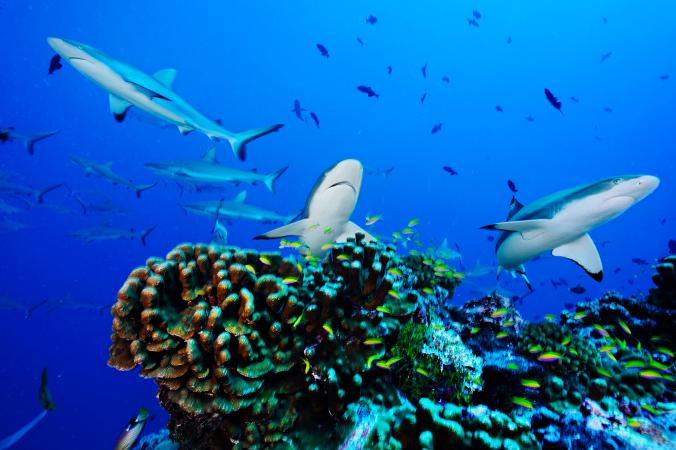 It is thought that the area is a waypoint on the whales’ 12,000 mile round trip from Alaska to the warmer waters of Mexico. Once they arrive in Mexico, they mate and give birth, so it’s only natural that there’s a little courting on the way down.
In Australia, scientists have observed dolphins giving sponges to potential mates in a possible show of courtship.
Vaquita
The world’s smallest porpoise, the Vaquita, faces risk of extinction, with only around 30 individuals remaining. Vaquitas routinely drown after getting caught up in gillnets used in the shrimp fisheries of the upper Gulf of California.
The Government of Mexico has now banned the nets, which are largely invisible to the porpoises, and an international committee of gear experts is now tackling the issue too. A new type of porpoise-friendly net is currently being tested at the Centre for Sustainable Aquatic Resources in Canada. There is therefore hope that the remaining Vaquitas will get a reprieve.
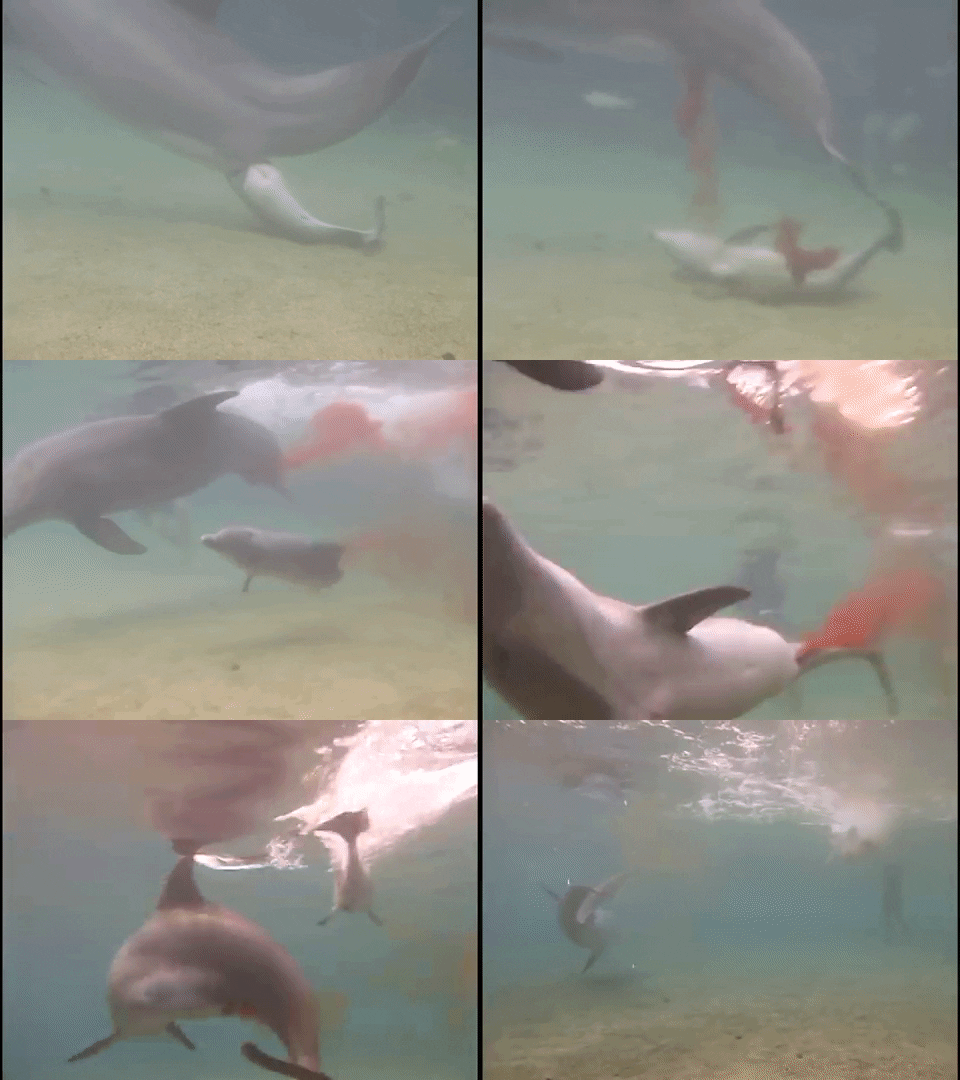 Dolphins are born “feet first”. Cetaceans are unable to breathe underwater, so if the baby’s head came first, it would suffocate during the birth. As soon as the umbilical cord is severed, the baby dolphin instinctively rising to the surface to draw breath.
The little dolphin is born without lips, which makes suckling a challenge. The baby dolphin lightly rattles his ribs against the mother's belly, letting her know he’s hungry and stimulating milk production. The mother then sprays the milk directly into the baby’s mouth.
#OceanOptimism
A new tribe of dolphins has been identified off the English coast. The Cornwall Wildlife Trust has spotted 28 individual bottlenose dolphins living near St Ives (with occasional forays to Devon and Dorset). Meanwhile, anecdotal reports of increased numbers of humpback whales off the southern and western coasts of Ireland are matched by an upward global trend for this species - a vindication of the 1983 global moratorium on the hunting of great whales.
Speaking in tongues
In Crimea, a captive beluga whale has seemingly "learned" a foreign language. Two months after arriving at the dolphinarium, the whale stopped making its usual vocalisations and started making the whistling tones unique to dolphins. Researchers have previously observed the same linguistic ability in killer whales, and last week new research revealed that orcas can even mimic human words such as ‘hello’ and ‘bye bye’.
From the editor
Nothing much from me this week. I'm tired and grumpy from too many deadlines. Also, I just stepped off a 5-hour train to Turin and am keen to get stuck into some Barbaresco and antipasti. Buon fine settimana!
Little Blue Letter was curated this week by Ludovica Di Renzo. Ludovica is a veterinarian and currently a PhD Student at the University of Teramo in Italy. She works at the Istituto Zooprofilattico Sperimentale dell’ Abruzzo e del Molise “G.Caporale”, conducting post-mortem on cetaceans and sea turtles to understand the impact on plastics and other anthropogenic impacts. In her spare time, she volunteers at Centro Studi Cetacei Onlus (the Italian Association for the Study of Cetaceans and Sea Turtles).
Editing etc. by Glen Wright. Glen is a researcher studying marine governance, the high seas, and ocean energy. He is a drinker of tea, lover of the sea, and an Oxford comma user. Glen recently published Academia Obscura: The Hidden Silly Side of Higher Education.
Little Blue Letter is a splash of uplifting ocean stuff, lovingly curated by young ocean leaders and shipped straight to your inbox every Friday. Pass it on, encourage other ocean lovers to sign up, and follow on Twitter.
Enjoy Reading This Article?
Here are some more articles you might like to read next: