19 April 2018 — The cure for everything is salt water: sweat, tears, or the sea
Sent 19 April 2018. Part of Little Blue Letter.

"The cure for everything is salt water: sweat, tears, or the sea"
~ Karen Blixen
~ Karen Blixen
Party poopers
A parody article published on April Fools day claimed that people with brown hair are particularly at risk of being dumped on by seagulls, while one informal study did actually find that seagulls may prefer to poop on red cars.
All jokes aside, seagull poo can be a serious issue. In the US, it is thought that 1.4 million seagulls feed at landfills, dropping tons of nitrogen and phosphorus into nearby waterways and contributing to algal blooms that suffocate marine life. In Canada, one port authority was sick of spending $20-30,000 a year cleaning up the guano (which stinks and is so acidic that it erodes roofs); they built a fake tree to attract nesting eagles that will scare off the seagulls.
Life in plastic
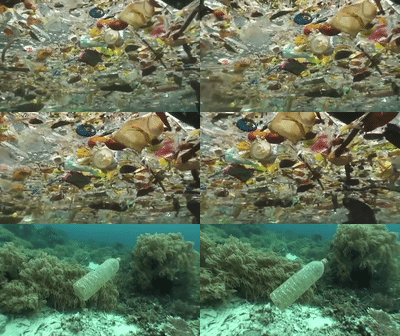
With an estimated 150 million tons of plastic in the oceans, there could soon be more plastic than fish. This week, I learned that plastics absorb and release toxic metals into marine ecosystems. But there is always some cause for hope. Following the discovery last year of an enzyme naturally able to break down some plastics, scientists introduced a mutation which speeds up the process. As always, further research is required, but the enzyme could one day contribute to the ocean cleanup.
A whale of a time
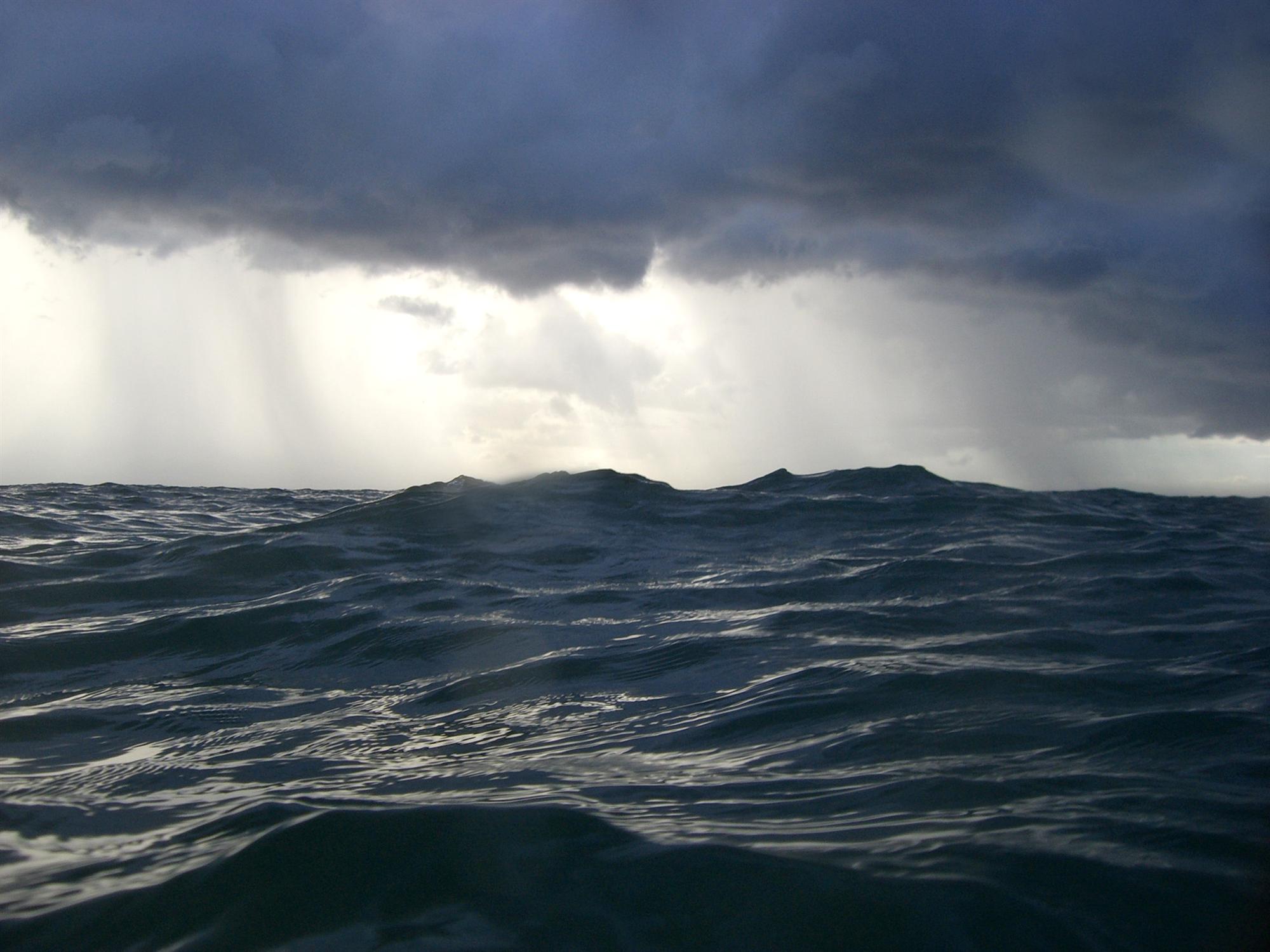
From the 6-10 April the European Cetacean Society (ECS) held its 32nd annual conference. This year's theme was "Marine Conservation - forging effective, strategic partnerships". Over 600 people from all over the world participated: check out the proceedings here.

Gif of the week
From the editor
Seagulls pooped on me a lot as a kid. I thought I was unlucky, but now I wonder if they target redheads? The extent of deep-sea bottom trawling appears to have been underestimated (no surprise there). If you read this newsletter, you probably already know that doom and gloom is not a good advocacy strategy. A recent study showed that ocean news is surprisingly upbeat. I've been binge-listening to a new podcast called Ologies. There are excellent episodes on teuthology (the study of squids and such) and ichthyology (the study of fish). Spring has finally sprung in Paris - bon weekend!

 Editing etc. by Glen Wright. Glen is a researcher studying marine governance, the high seas, and ocean energy. He is a drinker of tea, lover of the sea, and an Oxford comma user. Glen recently published Academia Obscura: The Hidden Silly Side of Higher Education.
Little Blue Letter is a splash of uplifting ocean stuff, lovingly curated by young ocean leaders and shipped straight to your inbox every Friday. Pass it on, encourage other ocean lovers to sign up, and follow on Twitter.
A parody article published on April Fools day claimed that people with brown hair are particularly at risk of being dumped on by seagulls, while one informal study did actually find that seagulls may prefer to poop on red cars.
All jokes aside, seagull poo can be a serious issue. In the US, it is thought that 1.4 million seagulls feed at landfills, dropping tons of nitrogen and phosphorus into nearby waterways and contributing to algal blooms that suffocate marine life. In Canada, one port authority was sick of spending $20-30,000 a year cleaning up the guano (which stinks and is so acidic that it erodes roofs); they built a fake tree to attract nesting eagles that will scare off the seagulls.
The artificial eagle nest on top of the Greater Victoria Harbour Authority building.
Life in plastic
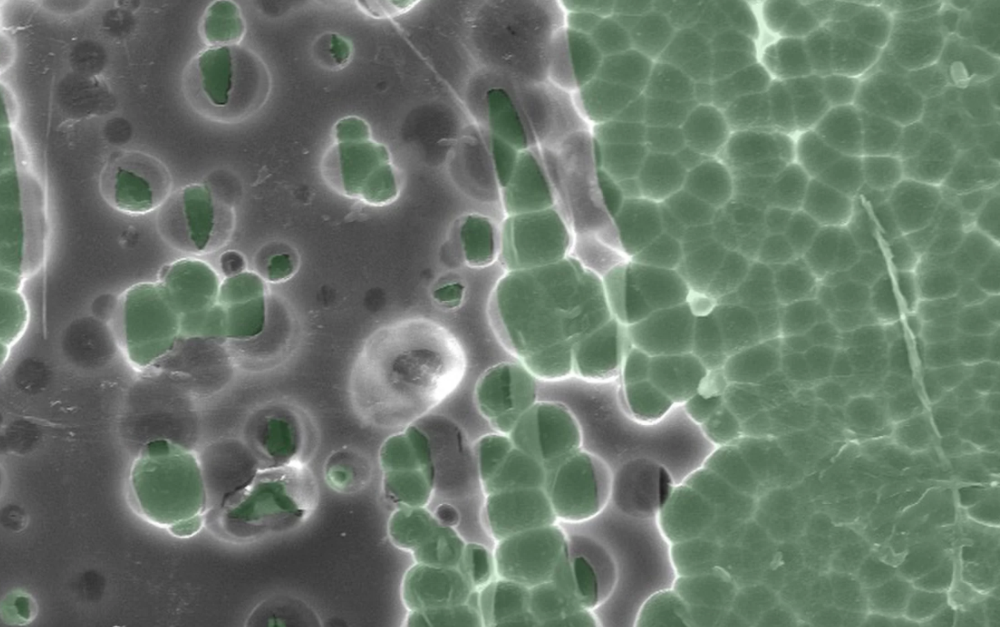
With an estimated 150 million tons of plastic in the oceans, there could soon be more plastic than fish. This week, I learned that plastics absorb and release toxic metals into marine ecosystems. But there is always some cause for hope. Following the discovery last year of an enzyme naturally able to break down some plastics, scientists introduced a mutation which speeds up the process. As always, further research is required, but the enzyme could one day contribute to the ocean cleanup.
An electron microscope image shows an engineered enzyme digesting PET plastic.
(Credit: Dennis Schroeder/NREL)
(Credit: Dennis Schroeder/NREL)
A whale of a time
From the 6-10 April the European Cetacean Society (ECS) held its 32nd annual conference. This year's theme was "Marine Conservation - forging effective, strategic partnerships". Over 600 people from all over the world participated: check out the proceedings here.
Gif of the week
Karmic fish
From the editor
Seagulls pooped on me a lot as a kid. I thought I was unlucky, but now I wonder if they target redheads? The extent of deep-sea bottom trawling appears to have been underestimated (no surprise there). If you read this newsletter, you probably already know that doom and gloom is not a good advocacy strategy. A recent study showed that ocean news is surprisingly upbeat. I've been binge-listening to a new podcast called Ologies. There are excellent episodes on teuthology (the study of squids and such) and ichthyology (the study of fish). Spring has finally sprung in Paris - bon weekend!
Little Blue Letter was curated this week by Ludovica Di Renzo. Ludovica is a veterinarian and a PhD Student at the University of Teramo in Italy. She works at the Istituto Zooprofilattico Sperimentale dell’ Abruzzo e del Molise “G.Caporale”, conducting post-mortem on cetaceans and sea turtles to understand the impact on plastics and other anthropogenic impacts. In her spare time, she volunteers at Centro Studi Cetacei Onlus (the Italian Association for the Study of Cetaceans and Sea Turtles).
Editing etc. by Glen Wright. Glen is a researcher studying marine governance, the high seas, and ocean energy. He is a drinker of tea, lover of the sea, and an Oxford comma user. Glen recently published Academia Obscura: The Hidden Silly Side of Higher Education.Little Blue Letter is a splash of uplifting ocean stuff, lovingly curated by young ocean leaders and shipped straight to your inbox every Friday. Pass it on, encourage other ocean lovers to sign up, and follow on Twitter.
Enjoy Reading This Article?
Here are some more articles you might like to read next: