18 May 2018 — HFO, GHG, IMO, OMG
Sent 18 May 2018. Part of Little Blue Letter.

"Everyone benefits from a frozen Arctic."
~ Sheila Watt-Cloutier, Canadian Inuit Activist
~ Sheila Watt-Cloutier, Canadian Inuit Activist
HFO, GHG, IMO, OMG
If shipping were a country, it’d be the sixth largest emitter of CO2 (right between Japan and Germany). So it’s exciting news that last April, the International Maritime Organization (IMO), the United Nations body responsible for developing environmental and safety regulations for international shipping, took steps to reduce the industry’s footprint.
Gif of the week
 Little Blue Letter was curated this week by Dj Tyson. Dj is the Arctic Program Assistant at Pacific Environment, an international environmental non-profit that seeks to protect the communities and wildlife of the Pacific Rim. After work, Dj explores the Alaska wilderness and writes, reads, and watches sci-fi stories.
 Editing etc. by Glen Wright. Glen is a researcher studying marine governance, the high seas, and ocean energy. He is a drinker of tea, lover of the sea, and an Oxford comma user. Glen recently published Academia Obscura: The Hidden Silly Side of Higher Education.
Little Blue Letter is a splash of uplifting ocean stuff, lovingly curated by young ocean leaders and shipped straight to your inbox every Friday. Pass it on, encourage other ocean lovers to sign up, and follow on Twitter
If shipping were a country, it’d be the sixth largest emitter of CO2 (right between Japan and Germany). So it’s exciting news that last April, the International Maritime Organization (IMO), the United Nations body responsible for developing environmental and safety regulations for international shipping, took steps to reduce the industry’s footprint.
Activists powered washed “IMO DONT SINK PARIS” onto a retaining wall directly across the River Thames from the IMO. (Credit: Campaign Against Climate Change)
Most notably, the IMO committed to reducing future greenhouse gas emissions by at least 50% by 2050 compared to 2008 levels, which aligns with the goals of the Paris Agreement. It’s not as high as some countries and environmental organizations were seeking, but the “at least” language leaves room for much improvement.
Another win for the ocean and the climate came with the commitment to develop a ban on heavy fuel oil (HFO) use in the Arctic, which accounts for 75% of fuel used in the region. HFO is a thick, tar-like sludge that emits black carbon, which can coat ice and speed up melting. In the event of a spill in Arctic waters, HFO would be nearly impossible to clean up.
Another win for the ocean and the climate came with the commitment to develop a ban on heavy fuel oil (HFO) use in the Arctic, which accounts for 75% of fuel used in the region. HFO is a thick, tar-like sludge that emits black carbon, which can coat ice and speed up melting. In the event of a spill in Arctic waters, HFO would be nearly impossible to clean up.
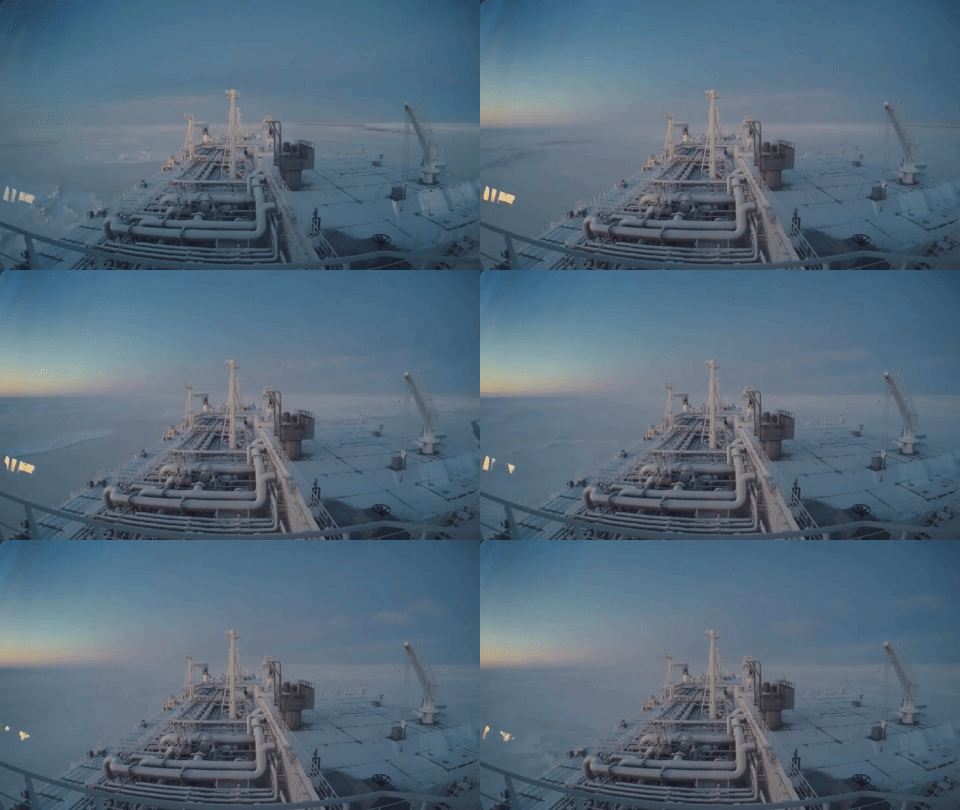
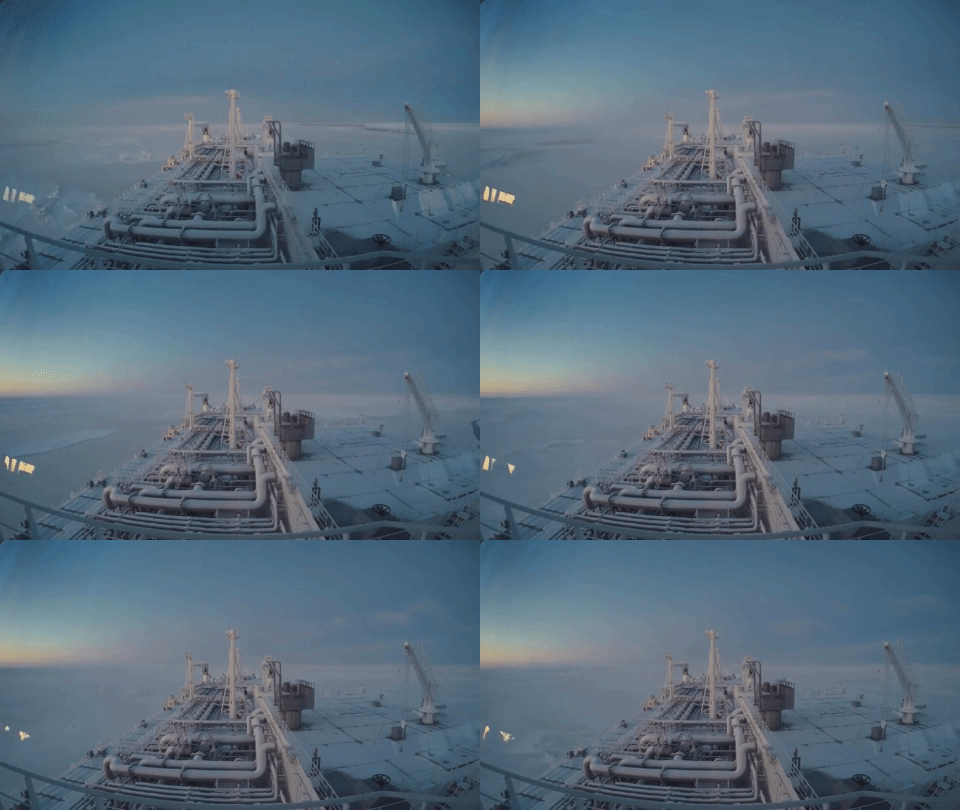
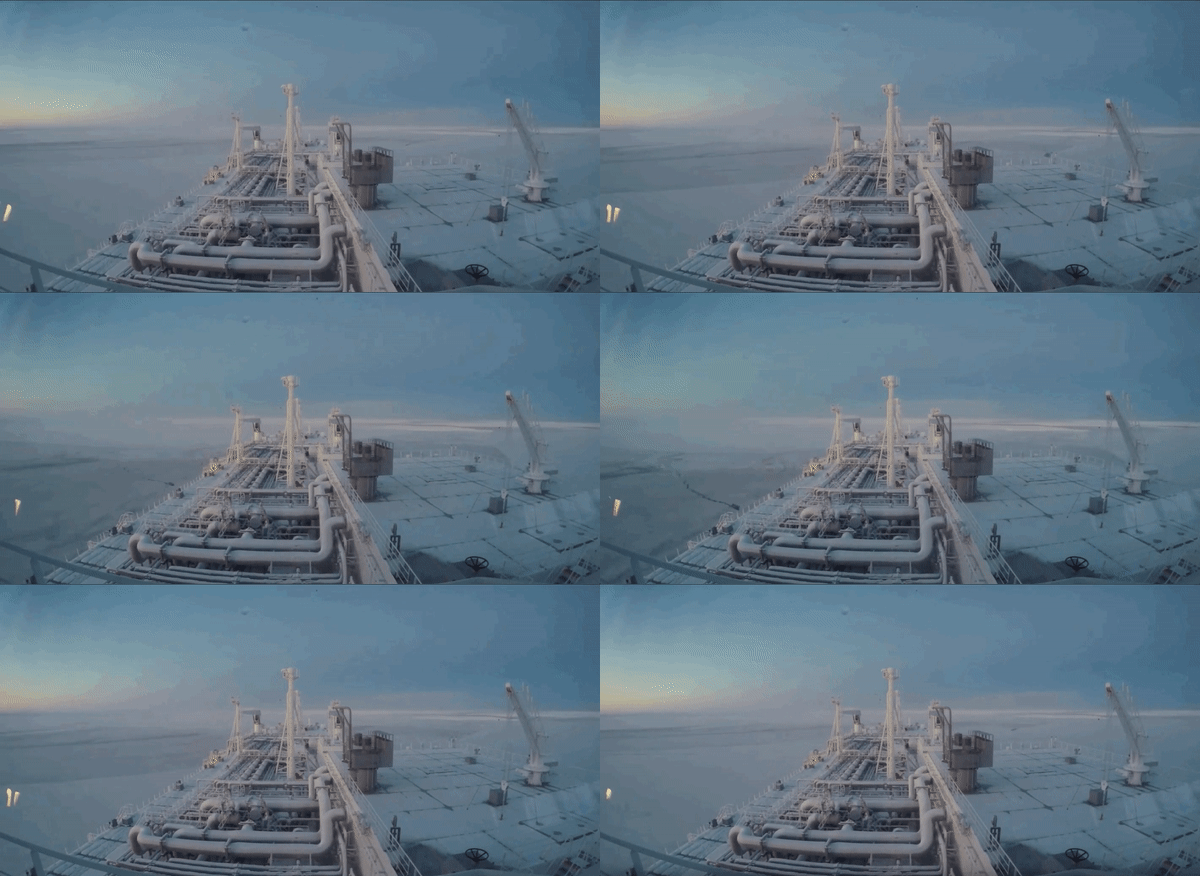
Gif of the week
The Eduard Toll drives through ice along the Northern Sea Route in January 2018, becoming the first shipping vessel to complete an independent winter passage.
#OceanOptimism
It can be hard to find optimistic news when talking about the polar regions of the world in the context of climate change, but this past week, we got some: humpback whales in the Antarctic are making a comeback! Once hunted to near extinction, researchers are seeing increasing rates of pregnant females.
From the editor
I've spent the last two days in an intense workshop on high seas fisheries, and now my brain is mush. So in lieu of something profound, here is a website where you can check whether the high seas are protected yet (hint: they are not) and here's a bonus gif of a narwhal:
From the editor
I've spent the last two days in an intense workshop on high seas fisheries, and now my brain is mush. So in lieu of something profound, here is a website where you can check whether the high seas are protected yet (hint: they are not) and here's a bonus gif of a narwhal:
Little Blue Letter was curated this week by Dj Tyson. Dj is the Arctic Program Assistant at Pacific Environment, an international environmental non-profit that seeks to protect the communities and wildlife of the Pacific Rim. After work, Dj explores the Alaska wilderness and writes, reads, and watches sci-fi stories.Editing etc. by Glen Wright. Glen is a researcher studying marine governance, the high seas, and ocean energy. He is a drinker of tea, lover of the sea, and an Oxford comma user. Glen recently published Academia Obscura: The Hidden Silly Side of Higher Education.Little Blue Letter is a splash of uplifting ocean stuff, lovingly curated by young ocean leaders and shipped straight to your inbox every Friday. Pass it on, encourage other ocean lovers to sign up, and follow on Twitter
Enjoy Reading This Article?
Here are some more articles you might like to read next: