26 September 2018 — Deeply surprising
Sent 26 September 2018. Part of Little Blue Letter.

"If the ocean can calm itself, so can you.
We are both salt water mixed with air."
~ Nayyirah Waheed
We are both salt water mixed with air."
~ Nayyirah Waheed
Deeply surprising
The Deep-Sea Biology Symposium took place in California last week, with researchers from around the world showcasing their latest finds. In areas once considered devoid of life or scientific interest, we now find "Gummy squirrels”, single-celled organisms the size of softballs, strange worms, fossil beds of whales that lived up to 16 million years ago, and an incredible array of fish and corals.
The International Seabed Authority has already issued licenses to 29 corporations and state-backed companies to explore the deep sea for minerals and is aiming to have exploitation regulations in place by 2020 (developed through a notoriously secretive process). Researchers say that devastating impacts are inevitable and irrevocable, and many are now calling for a moratorium.
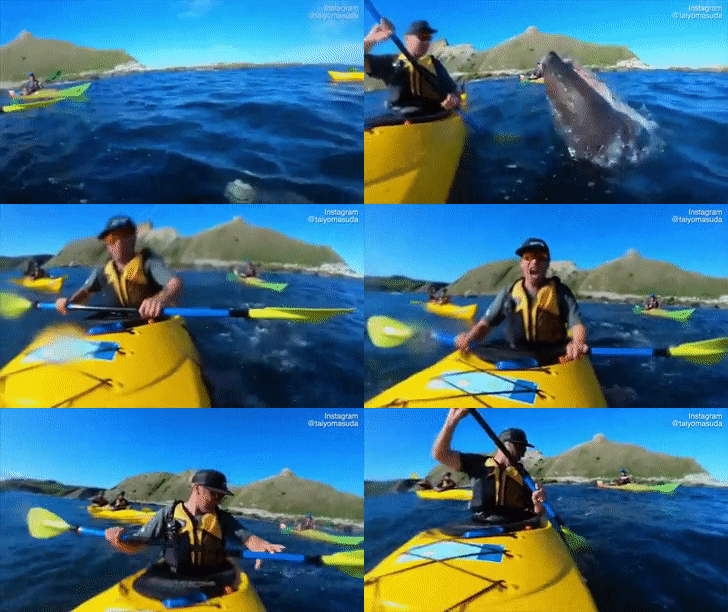
 A seal. Slapping a kayaker. In the face. With an octopus.
The Deep-Sea Biology Symposium took place in California last week, with researchers from around the world showcasing their latest finds. In areas once considered devoid of life or scientific interest, we now find "Gummy squirrels”, single-celled organisms the size of softballs, strange worms, fossil beds of whales that lived up to 16 million years ago, and an incredible array of fish and corals.
Red shrimp, a rattail fish and crustaceans called amphipods.
Credit: DeepCCZ project
Credit: DeepCCZ project
The International Seabed Authority has already issued licenses to 29 corporations and state-backed companies to explore the deep sea for minerals and is aiming to have exploitation regulations in place by 2020 (developed through a notoriously secretive process). Researchers say that devastating impacts are inevitable and irrevocable, and many are now calling for a moratorium.
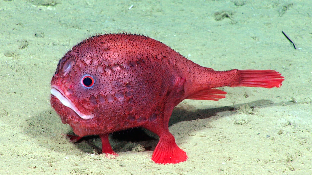
A Chaunacops anglerfish
Credit: NOAA Office of Ocean Exploration and Research
Credit: NOAA Office of Ocean Exploration and Research
Ocean leadership
The UK announced this week that it will support a goal of protecting 30% of the global ocean, a target previously suggested as necessary by scientific studies. Elsewhere, the inaugural meeting of the High-level Panel on Building a Sustainable Ocean Economy took place. Norwegian Prime Minister Erna Solberg, whose country is spearheading the initiative, said: "As the only ocean policy body consisting of serving world leaders, we have the authority and determination needed to trigger, amplify and accelerate action for ocean protection and production... Our goal is to advance a new contract that will both protect the oceans and optimise their value to humankind."
The UK announced this week that it will support a goal of protecting 30% of the global ocean, a target previously suggested as necessary by scientific studies. Elsewhere, the inaugural meeting of the High-level Panel on Building a Sustainable Ocean Economy took place. Norwegian Prime Minister Erna Solberg, whose country is spearheading the initiative, said: "As the only ocean policy body consisting of serving world leaders, we have the authority and determination needed to trigger, amplify and accelerate action for ocean protection and production... Our goal is to advance a new contract that will both protect the oceans and optimise their value to humankind."
Gif of the week
A seal. Slapping a kayaker. In the face. With an octopus. Octopuses in ecstasy
"Before the drug, they explored the chamber with the other octopus very tentatively. They mashed themselves against one wall, very slowly extended one arm, touched the [other animal], and went back to the other side... But when they had MDMA, they had this very relaxed posture. They floated around, they wrapped their arms around the chamber, and they interacted with the other octopus in a much more fluid and generous way. They even exposed their [underside], where their mouth is, which is not something octopuses usually do."
"Before the drug, they explored the chamber with the other octopus very tentatively. They mashed themselves against one wall, very slowly extended one arm, touched the [other animal], and went back to the other side... But when they had MDMA, they had this very relaxed posture. They floated around, they wrapped their arms around the chamber, and they interacted with the other octopus in a much more fluid and generous way. They even exposed their [underside], where their mouth is, which is not something octopuses usually do."
Seen on twitter
From the editor
“The commercial fishing industry is losing the battle over the social license to operate... I believe fishing industries worldwide need to step forward and accept levels of transparency in fishing activities that were unimaginable a decade ago”, says Ray Hillborn, a leading (and sometimes controversial) fisheries scientist and professor at the University of Washington. The US Board on Geographic Names quietly decided to rename Antarctica’s Marchant Glacier after an investigation concluded that its namesake, Boston University geologist David Marchant, sexually harassed a former graduate student. Photos of bored tourists on their smartphones. The bridge that crossed an ocean (And the man who moved it). How corporations can lead on ocean science. A lovely long read about giant glowing clams.
“The commercial fishing industry is losing the battle over the social license to operate... I believe fishing industries worldwide need to step forward and accept levels of transparency in fishing activities that were unimaginable a decade ago”, says Ray Hillborn, a leading (and sometimes controversial) fisheries scientist and professor at the University of Washington. The US Board on Geographic Names quietly decided to rename Antarctica’s Marchant Glacier after an investigation concluded that its namesake, Boston University geologist David Marchant, sexually harassed a former graduate student. Photos of bored tourists on their smartphones. The bridge that crossed an ocean (And the man who moved it). How corporations can lead on ocean science. A lovely long read about giant glowing clams.
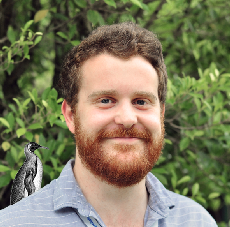
Little Blue Letter was curated this week by Glen Wright. Glen is a researcher studying marine governance, the high seas, and ocean energy. He is a drinker of tea, lover of the sea, and an Oxford comma user. Glen recently published Academia Obscura: The Hidden Silly Side of Higher Education.
Enjoy Reading This Article?
Here are some more articles you might like to read next: