5 April 2019 — G
Sent 5 April 2019. Part of Little Blue Letter.

"Yet is there hope. Time and tide flow wide."
~ Moby Dick at Sea
~ Moby Dick at Sea
The Twilight Zone 
Dive deeper
Meanwhile, on land
“Floating Cities Aren’t the Answer to Climate Change” - a call to restructure sociospatial relations on land rather than floating our urban problems out to sea.
From the editor
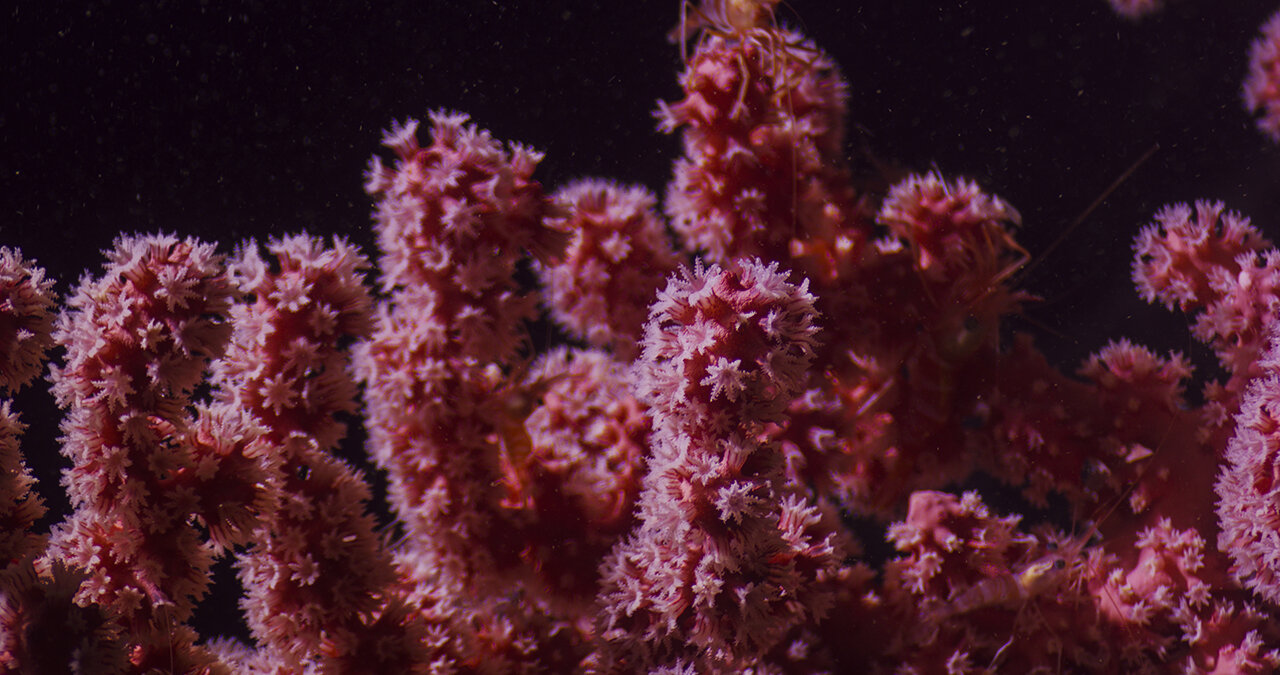
A a LEGO-based marine exploration kit?! Shut up and take my money. Norway has explored the possibility of fishing in the mesopelagic zone. Those fish play a bigger role in the carbon cycle than we currently give them credit for, so eating them is almost certainly a terrible idea. "Concerns of young protesters are justified" (no shit): in a short and sweet paper in Science, climate experts throw their weight behind the School Strikes. New species of deep-sea corals have been discovered in the Atlantic marine monument:
We’ve received some big news about black holes this week, but the depths of the mesopelagic zone (200-1000m), also known as the Ocean Twilight Zone (OTZ), might be just as mysterious as outer space.
The Woods Hole Oceanographic Institute’s (WHOI) Ocean Twilight Zone project is hard at work studying the OTZ. Researchers are trying to understand the behaviors, life cycles, and distributions of animals that live there, the food web linkages between them, and their roles in global climate cycles. (They are also producing some seriously gorgeous eye candy). Take a look at #OceanTwilightZone or this New York Times article.
One of my favorite images, of a silver hatchetfish:
The Woods Hole Oceanographic Institute’s (WHOI) Ocean Twilight Zone project is hard at work studying the OTZ. Researchers are trying to understand the behaviors, life cycles, and distributions of animals that live there, the food web linkages between them, and their roles in global climate cycles. (They are also producing some seriously gorgeous eye candy). Take a look at #OceanTwilightZone or this New York Times article.
One of my favorite images, of a silver hatchetfish:
Here’s a short update from WHOI and the world of marine policy about how delegations to the UN might consider the OTZ during negotiations for a new treat for the conservation of biodiversity in the high seas.
Gif of the week

This rendering shows the daily migration of marine life to and from the OTZ to the surface (from NASA, reporting on WHOI OTZ research). Many call this the largest migration on earth, and while we know it plays an enormous role in global biogeochemical cycles, we still have much to learn before we understand it fully.
Citizen science
Many great projects are finding inventive ways to involve everyone in ocean research and conservation science:
Many great projects are finding inventive ways to involve everyone in ocean research and conservation science:
- MIT’s Media Lab’s LEGO Wayfinder Project is working to develop a LEGO-based marine exploration kit to help young people take part in ocean exploration.
- Ocean Sanctuaries is a non-profit hard at work helping people conduct and participate in marine science.
- Check out NASA’s citizen science page for a round-up of projects they support.
Dive deeper
- “A Whale’s Afterlife,” a brilliant article in which Jeffrey Marlow describes the process of sinking a whale carcass at sea and returning to visit it and understand the rich life it supports.
- A video from WHOI, “From Mud to Molecules,” (5:53) explaining what we can learn about past climates by studying deep sea sediments.
- #SundayFishSketch will have you reaching for your art supplies.
Meanwhile, on land
“Floating Cities Aren’t the Answer to Climate Change” - a call to restructure sociospatial relations on land rather than floating our urban problems out to sea.
From the editor
A a LEGO-based marine exploration kit?! Shut up and take my money. Norway has explored the possibility of fishing in the mesopelagic zone. Those fish play a bigger role in the carbon cycle than we currently give them credit for, so eating them is almost certainly a terrible idea. "Concerns of young protesters are justified" (no shit): in a short and sweet paper in Science, climate experts throw their weight behind the School Strikes. New species of deep-sea corals have been discovered in the Atlantic marine monument:
Bubblegum Coral
©Ivan Agerton (OceanX)
 Little Blue Letter was curated this week by Aria Ritz Finkelstein. Aria studies high seas negotiations at MIT’s Department of Urban Studies and Planning and WHOI’s Marine Policy Center. Find her at www.ariaritz.com or tweeting (sporadically) at @ariaritz.
 Editing etc. by Glen Wright. Glen is doing research on marine governance, the high seas, and ocean energy. He is a drinker of tea, lover of the sea, and an Oxford comma user.
Recently published: Academia Obscura: The Hidden Silly Side of Higher Education.
©Ivan Agerton (OceanX)
Little Blue Letter was curated this week by Aria Ritz Finkelstein. Aria studies high seas negotiations at MIT’s Department of Urban Studies and Planning and WHOI’s Marine Policy Center. Find her at www.ariaritz.com or tweeting (sporadically) at @ariaritz. Editing etc. by Glen Wright. Glen is doing research on marine governance, the high seas, and ocean energy. He is a drinker of tea, lover of the sea, and an Oxford comma user.Recently published: Academia Obscura: The Hidden Silly Side of Higher Education.
Enjoy Reading This Article?
Here are some more articles you might like to read next: