10 May 2019 — Protecting a volcanic island oasis
Sent 10 May 2019. Part of Little Blue Letter.

~ Rachel Carson
In the South Atlantic Ocean, between the Northeast coast of Brazil and the Northwest coast of Africa, lies an island of natural wonders, where conservationists are adopting innovative management measures to combine sustainable tourism with environmental awareness and conservation.
Of volcanic origin, the archipelago of Fernando de Noronha is a UNESCO World Heritage Site, first discovered in the early 1500s by Americo Vespucio. It has been colonized by the Portuguese, fought over by French, English and Dutch, and even used as a prison in the 18th century, when occupation and deforestation took place on the main island.
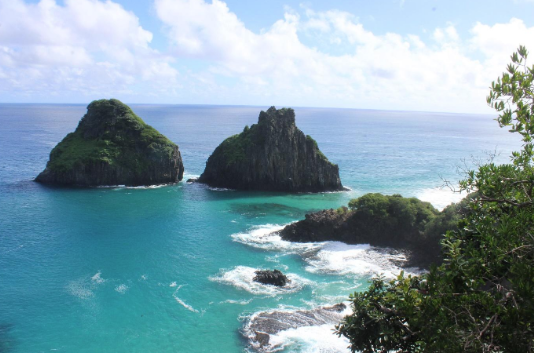
Two Brothers Mountain
The tropical waters are nourished between February and July each year, when rainfall dramatically increases and the ocean bursts into life. The archipelago is a sanctuary to marine life, mainly, tuna, reef-sharks, dolphins, sea turtles reside and breed in the islands. It also represents a migratory hotspot for seabirds and humpback whales. The islands are home to the largest concentration of tropical seabirds in the Western Atlantic.
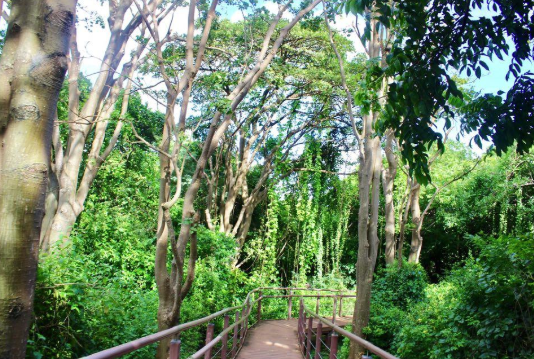
A walkway through the native rainforest leads to the main tourist sights
Fernando de Noronha National Park has been recognised as an example of successful management and well run Marine Protected Area. To effectively safeguard the island's pristine environment, authorities have adopted a range of measures, such as: charging for entry, controlling tourism and migration flow, restricting the number of flights that can land in the atoll, strict residence rules (at present approximately 6000 people live there) and banning plastic.
Welcome sign at the airport announcing the plastics ban.
However, a dramatic change of approach from the new federal government (under President Bolsonaro) may cut funding and slowly shutdown innovative management bodies. Artisanal fishers are also raising concerns that foreign-flagged vessels are fishing in the archipelago waters. And even if plastic is banned locally, global currents can still bring marine litter - a sea turtle was found entangled in plastic packaging from Thailand.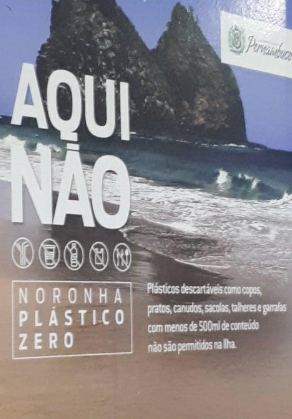
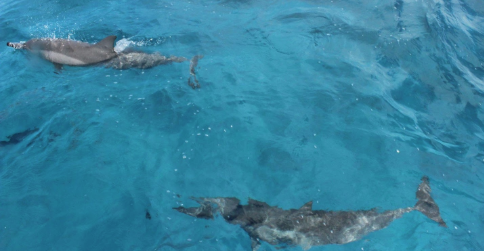
Hello from the island's dolphins!
Gif of the week
From the editor
6 recent signs of ocean hope. Asian Development Bank launches USD 5 bn Action Plan for Healthy Oceans. OceanDEMO will support deployment of wave and tidal energy.
 Little Blue Letter was curated this week by Theissa Meira. Thaissa is a researcher at the Foundation for International Law for the Environment (FILE), carrying out research on marine environment and biodiversity protection and climate change litigation under the law of the sea. She is currently on a field mission at Fernando de Noronha and felt like briefly sharing some of her perceptive here with you.
 Editing etc. by Glen Wright. Glen is a researcher studying marine governance, the high seas, and ocean energy. He is a drinker of tea, lover of the sea, and an Oxford comma user. Glen recently published Academia Obscura: The Hidden Silly Side of Higher Education.
Little Blue Letter is a splash of uplifting ocean stuff,
lovingly curated by young ocean leaders
and shipped straight to your inbox every Friday.
Sign up, pass it on, follow on twitter, or write an edition.
🌊🌊🌊
Enjoy Reading This Article?
Here are some more articles you might like to read next: