8 September 2019 — Hello there!
Sent 8 September 2019. Part of Little Blue Letter.

"Those who live by the sea can hardly form a single thought
of which the sea would not be part.”
~ Hermann Broch
of which the sea would not be part.”
~ Hermann Broch
Hello there!
It's been a while! We've been on an extended summer hiatus, but normal service is hereby resumed. While you are here: do you know any young ocean leaders that might be interested in curating upcoming issues? We have a few slots open for November and December and would love to hear from new voices. The sign-up sheet is here.
Outlaw ocean
A new book, The Outlaw Ocean, has been making waves in the past couple of weeks. Written by award-winning New York Times investigative journalist Ian Urbina, it exposes the "last frontier", a "strange world that few on land ever experience" (Vice article; Guardian long read). World Ocean Radio, is running a four-part series, including readings from the book. It's not just illegal fishing and slave labour either: Mexican drug baron ‘El Chapo’ used a US seafood firm to launder drug money and Chinese customs officials once found cocaine being smuggled in shipments of frozen mackerel!
High hopes for the high seas
The third round of negotiations for a new treaty on high seas biodiversity just wrapped up in New York. The Earth Negotiations Bulletin notes, "delegates patted themselves on the back for having gone through the major elements of the draft text... but acknowledged that more needs to be done to address the pressing matters..." Yet many from the conservation community see the negotiations as moving far too slowly and with little ambition for the strong treaty needed to protect our planet's last wilderness. What would an ambitious treaty look like? This IDDRI policy brief has some suggestions.
Gif of the week
Bits and bobs
IMarEST Ballast Water Special Interest Group
Invasive species are one of the biggest threats to global biodiversity and the transfer of these non-native species through ships’ ballast water – used to improve stability at sea – is a huge culprit for their transportation to new waters around the world. With the continued growth of the international shipping sector, there is a global need to address the issue. With consultative status at the International Maritime Organisation (IMO), the IMarEST Ballast Water Management expert group/SIG works towards reducing the industry’s spread of alien species by contributing to the development of the Ballast Water Management Convention which is now in its experience building phase and implementation due in 2020.
IMarEST is an international learned society and membership body that brings marine engineers, scientists and technologists together. Its Special Interest Groups (SIGs) provide a platform for knowledge-sharing, outreach and advisory information for the wider industry – in some cases influencing legislation and policy. You can find out more information on the Special Interest Group and its outputs, alongside other IMarEST groups and how to get involved on the IMarEST website. Follow on Facebook, Twitter and Instagram for inspiring stories and up-to-date marine news.
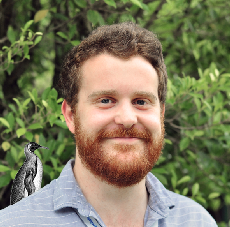 Curated this week by Glen Wright. Glen is a researcher studying marine governance, the high seas, and ocean energy. He is a drinker of tea, lover of the sea, and an Oxford comma user. Glen recently published Academia Obscura: The Hidden Silly Side of Higher Education.
Little Blue Letter is a splash of uplifting ocean stuff,
lovingly curated by young ocean leaders
and shipped straight to your inbox every Friday.
Sign up, pass it on, follow on twitter, or write an edition.
🌊🌊🌊
It's been a while! We've been on an extended summer hiatus, but normal service is hereby resumed. While you are here: do you know any young ocean leaders that might be interested in curating upcoming issues? We have a few slots open for November and December and would love to hear from new voices. The sign-up sheet is here.
Outlaw ocean
A new book, The Outlaw Ocean, has been making waves in the past couple of weeks. Written by award-winning New York Times investigative journalist Ian Urbina, it exposes the "last frontier", a "strange world that few on land ever experience" (Vice article; Guardian long read). World Ocean Radio, is running a four-part series, including readings from the book. It's not just illegal fishing and slave labour either: Mexican drug baron ‘El Chapo’ used a US seafood firm to launder drug money and Chinese customs officials once found cocaine being smuggled in shipments of frozen mackerel!
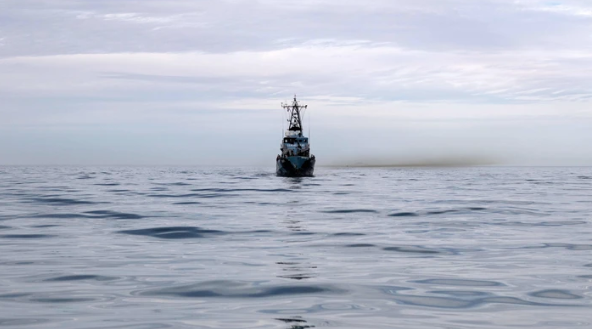
A Sea Sheperd vessel on the high seas
© Guillermo Arias/AFP/Getty Images
© Guillermo Arias/AFP/Getty Images
High hopes for the high seas
The third round of negotiations for a new treaty on high seas biodiversity just wrapped up in New York. The Earth Negotiations Bulletin notes, "delegates patted themselves on the back for having gone through the major elements of the draft text... but acknowledged that more needs to be done to address the pressing matters..." Yet many from the conservation community see the negotiations as moving far too slowly and with little ambition for the strong treaty needed to protect our planet's last wilderness. What would an ambitious treaty look like? This IDDRI policy brief has some suggestions.
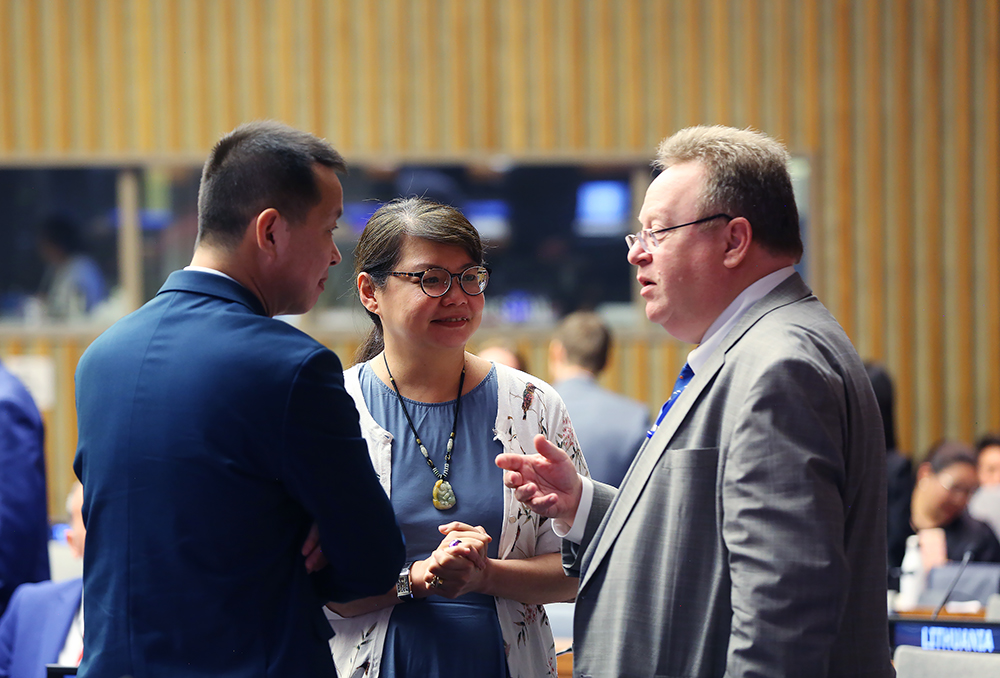
Negotiators from China (L) and the USA (R) talk with the chair of the negotiations, Rena Lee from Singapore.
© IISD
© IISD
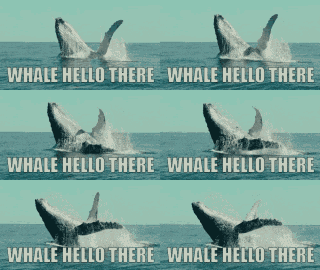
Gif of the week
Sea Angel (i.e. a tiny carnivorous swimming sea slug - scientific description here)
Bits and bobs
- Researchers suggest seaweed farming to mitigate carbon emissions.
- An ocean heatwave known as "The Blob" could spell trouble for salmon and sea lions on the west coast of America.
- Early whales might have "doggy paddled" from India to Africa.
- Most of the world's marine plastics are stuck on our shorelines.
IMarEST Ballast Water Special Interest Group
Invasive species are one of the biggest threats to global biodiversity and the transfer of these non-native species through ships’ ballast water – used to improve stability at sea – is a huge culprit for their transportation to new waters around the world. With the continued growth of the international shipping sector, there is a global need to address the issue. With consultative status at the International Maritime Organisation (IMO), the IMarEST Ballast Water Management expert group/SIG works towards reducing the industry’s spread of alien species by contributing to the development of the Ballast Water Management Convention which is now in its experience building phase and implementation due in 2020.
IMarEST is an international learned society and membership body that brings marine engineers, scientists and technologists together. Its Special Interest Groups (SIGs) provide a platform for knowledge-sharing, outreach and advisory information for the wider industry – in some cases influencing legislation and policy. You can find out more information on the Special Interest Group and its outputs, alongside other IMarEST groups and how to get involved on the IMarEST website. Follow on Facebook, Twitter and Instagram for inspiring stories and up-to-date marine news.
Curated this week by Glen Wright. Glen is a researcher studying marine governance, the high seas, and ocean energy. He is a drinker of tea, lover of the sea, and an Oxford comma user. Glen recently published Academia Obscura: The Hidden Silly Side of Higher Education.Little Blue Letter is a splash of uplifting ocean stuff,
lovingly curated by young ocean leaders
and shipped straight to your inbox every Friday.
Sign up, pass it on, follow on twitter, or write an edition.
🌊🌊🌊
Enjoy Reading This Article?
Here are some more articles you might like to read next: