19 September 2019 — Everyday is World Oceans Day for me. I'm either in, on or around ocean
Sent 19 September 2019. Part of Little Blue Letter.

~ Dr. Asha de Vos
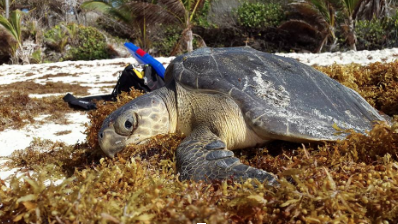
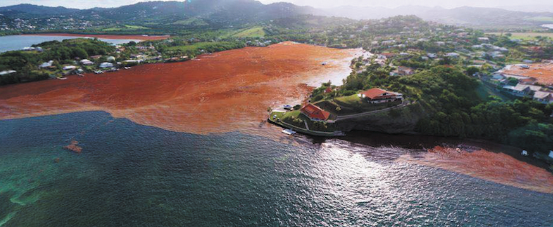 When washed ashore at beaches, seaweed mats as deep as seven meters start to decompose, causing damage to sea turtle populations whose nesting sites become blocked or damaged by removal work. In the recent UNCTAD Raul Prebisch Lecture (presented by a woman for the first time!), the Prime Minister of Barbados, Mia Mottley, warned the global community of the growing problem, highlighting a lack of resources for small islands to cope with this challenge.
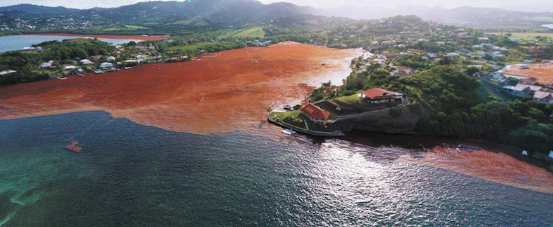
Fortunately, people are finding ingenious solutions. Barbados has repurposed old sugar cane trucks to pick sargassum without removing sand from the beaches. A company in Guadeloupe has developed a boat equipped with a conveyor belt to collect the weeds quickly. From Plant tonics to fertilizers to goat feed, other commercial uses are being explored.
Gif of the week
 Often called living fossils, feather stars date back about 200 million years!
#OceanOptimis
- These five incredible female ocean activists walk the talk, including Sri Lankan researcher Dr. Asha de Vos, who convinces you in 5 minutes that whale poo is cool!
- Coral gardeners bring back Jamaica’s reefs by painstakingly tending to their coral nurseries. Some of them are fishermen who came to understand the vital linkage between flourishing coral reefs and healthy fish stocks.
- The tiny Central American country of Belize is a world leader in protecting the ocean. In close collaboration with the fishing community, a managed access fishing programme restricts ‘open access’ fishing through the distribution of licenses, thereby reducing pressure on vital fish stocks and the incentive to fish illegally.
- Salmon farming in the Patagonian Sea is facing a growing wave of resistance due to its environmentally damaging and polluting practices. Campaigners have now put a stop to one company’s plans to rear 1.9m fish in the Beagle Channel between Chile and Argentina.
 Little Blue Letter was curated this week by Leonie Meier. Leonie is currently Consultant at the UN Economic Commission for Europe in Geneva and wrote her Master Thesis about policy responses to microplastic pollution.
 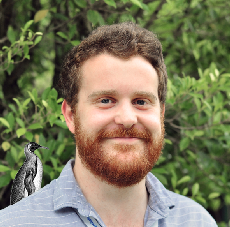 Editing etc. by Glen Wright. Glen is a researcher studying marine governance, the high seas, and ocean energy. He is a drinker of tea, lover of the sea, and an Oxford comma user. Glen recently published Academia Obscura: The Hidden Silly Side of Higher Education.
Little Blue Letter is a splash of uplifting ocean stuff,
lovingly curated by young ocean leaders
and shipped straight to your inbox every Friday.
Sign up, pass it on, follow on twitter, or write an edition.
🌊🌊🌊
Enjoy Reading This Article?
Here are some more articles you might like to read next: