4 December 2020 — For civilization to survive, the human race has to remain civilized.
Sent 4 December 2020. Part of Little Blue Letter.
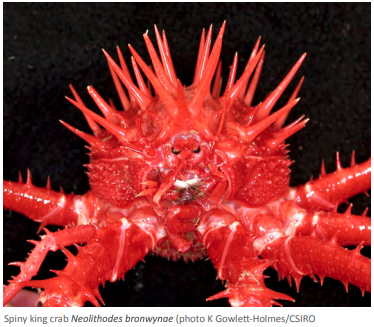 “For civilization to survive, the human race has to remain civilized."
~ Rod Serling
Into the twilight zone
Little light reaches the depths of the Ocean's mesopelagic layer, ~150-1,000 metres below the surface. Our scientific understanding of this vast "twilight zone" remains limited, yet most of the world's fish live there, alongside a diverse range of crustaceans, cephalopods and gelatinous zooplankton ("jellies").

Lanternfish (myctophids), a family of about 250 species of small fish, are particularly abundant. They are a key link in marine food webs, feeding on plankton before themselves falling prey to tuna and other commercially important species.
© Paul Caiger, Woods Hole Oceanographic Institute
© Paul Caiger, Woods Hole Oceanographic Institute
Many mesopelagic organisms make a daily journey through the water column (up in the evening, down at first light). This massive migration transfers energy from the highly productive surface waters to the dark depths below and acts as a "biological pump" that locks away huge quantities of carbon.
 The possibility of harvesting mesopelagic fish has been known since the 1970s but they were too hard to catch and process. (They also taste bad and contain harmful toxins.) Recent technological advancements now make it possible to fish in these waters and turn the catch into fishmeal and omega 3 oils, so interest is growing in using them for aquaculture and nutritional supplements.
Cautionary tales abound in the history of fisheries management, as humans have repeatedly fished stocks to collapse. As mesopelagic species and ecosystems play a critical role in the carbon cycle and marine food webs, mismanagement could have profound global ramifications.
In our new report, Fishing in the Twilight Zone, we tried our best to figure out how a mesopelagic fishery would be regulated under existing international rules and set out some options for strengthening the governance framework (summary blog here). The rules are messy and inadequate, and many scientists think we need a moratorium on fishing to protect the mesopelagic zone, before it's too late.
A webinar will take place next Wednesday, with leading scientists introducing the fascinating ecology of the mesopelagic zone and a discussion of the policy implications. Register here.
Gif of the week
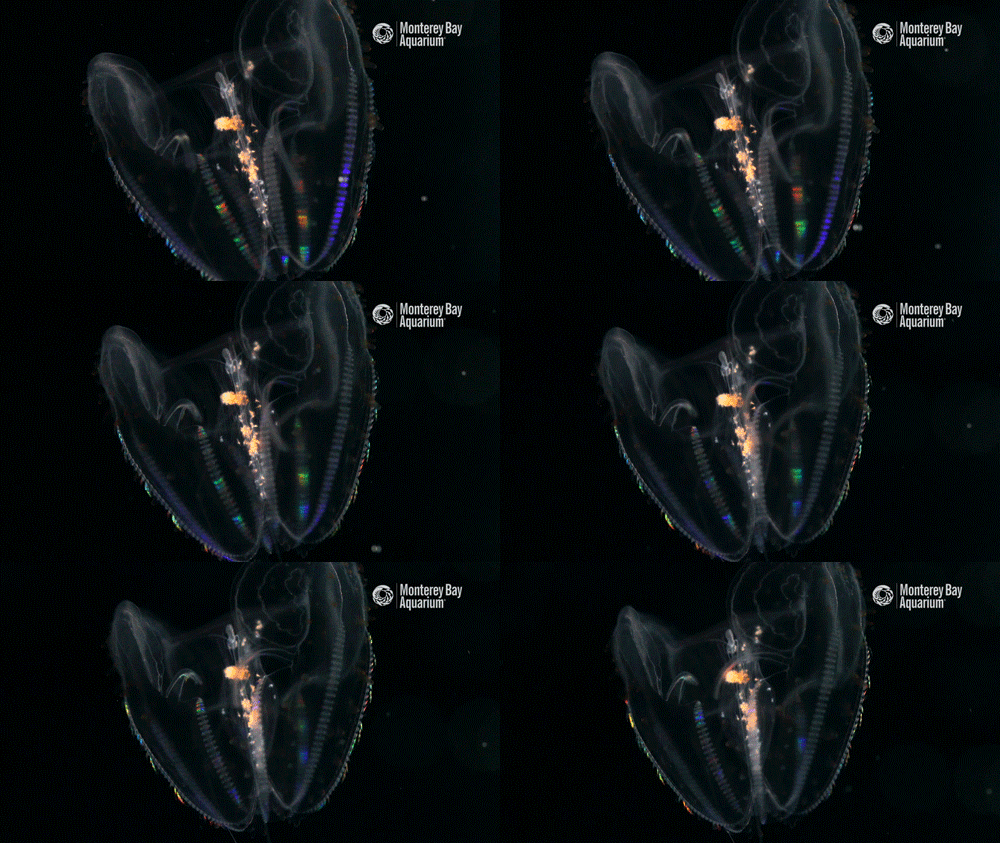
Comb jelly
Ocean update
- The High Level Panel for Sustainable Ocean Economy has launched a call to action, urging leaders to sustainably manage their waters and pushing for transformative action.
- Two intense weeks of negotiation are expected as States try to agree on phasing out harmful fisheries subsidies: “The end is in sight for these negotiations. We have an opportunity, not to be missed, for the world to come together and exercise our collective responsibility for our precious fisheries resources, for the good of the Ocean and of the fisherfolk that rely on it” (chair of the talks, Ambassador Santiago Wills of Colombia).
- Negotiations on lowering shipping emissions fave failed, again.
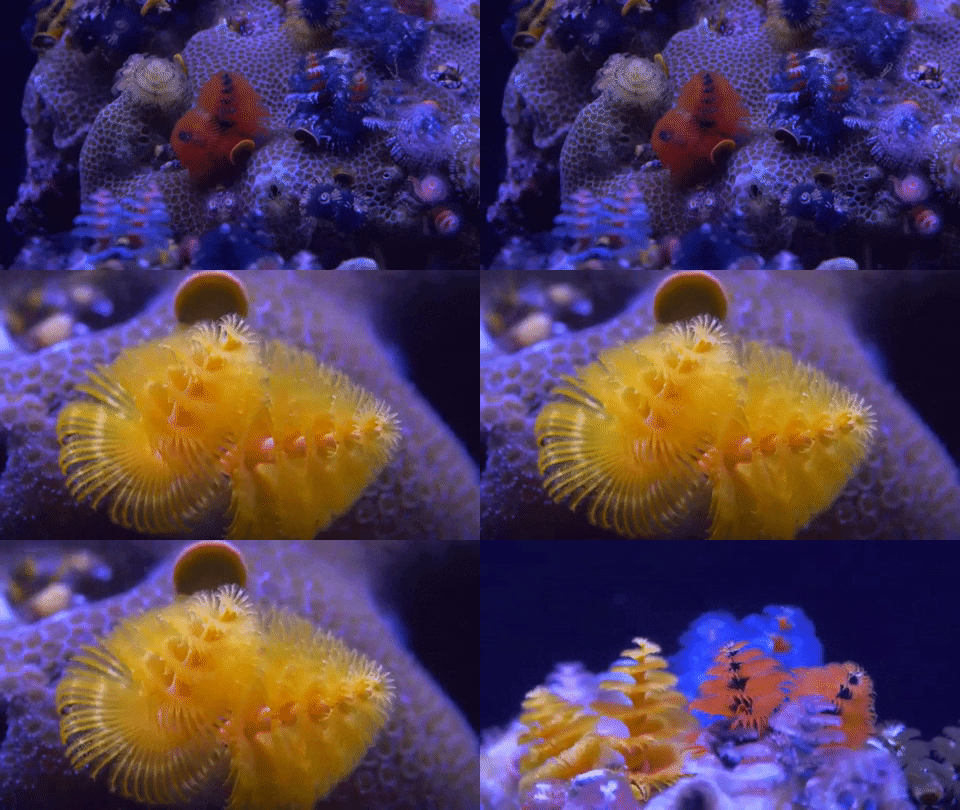
Tiny seascape
Written this week by Glen Wright, a researcher studying marine governance.
Glen is a drinker of tea, lover of the sea, and an Oxford comma user.
He is the author of Academia Obscura: The Hidden Silly Side of Higher Education.
Glen is a drinker of tea, lover of the sea, and an Oxford comma user.
He is the author of Academia Obscura: The Hidden Silly Side of Higher Education.
Enjoy Reading This Article?
Here are some more articles you might like to read next: