First analysis: from transcript to useful results
The shortest realistic path from importing a transcript to reading your first analysis results.
Outcome
You will have imported a transcript, completed a Balanced analysis run, and identified several useful outputs on Overview.
Starting point
TranscriptX is running and you can open the sidebar. You do not need local AI for this workflow.
Download or copy the sample file planning_review.json so you can import it.
What you’ll do
Import the sample transcript.
Glance at the transcript text.
Run analysis with the Balanced preset.
Open Overview and note the main results.
Decide where to go next.
Walkthrough
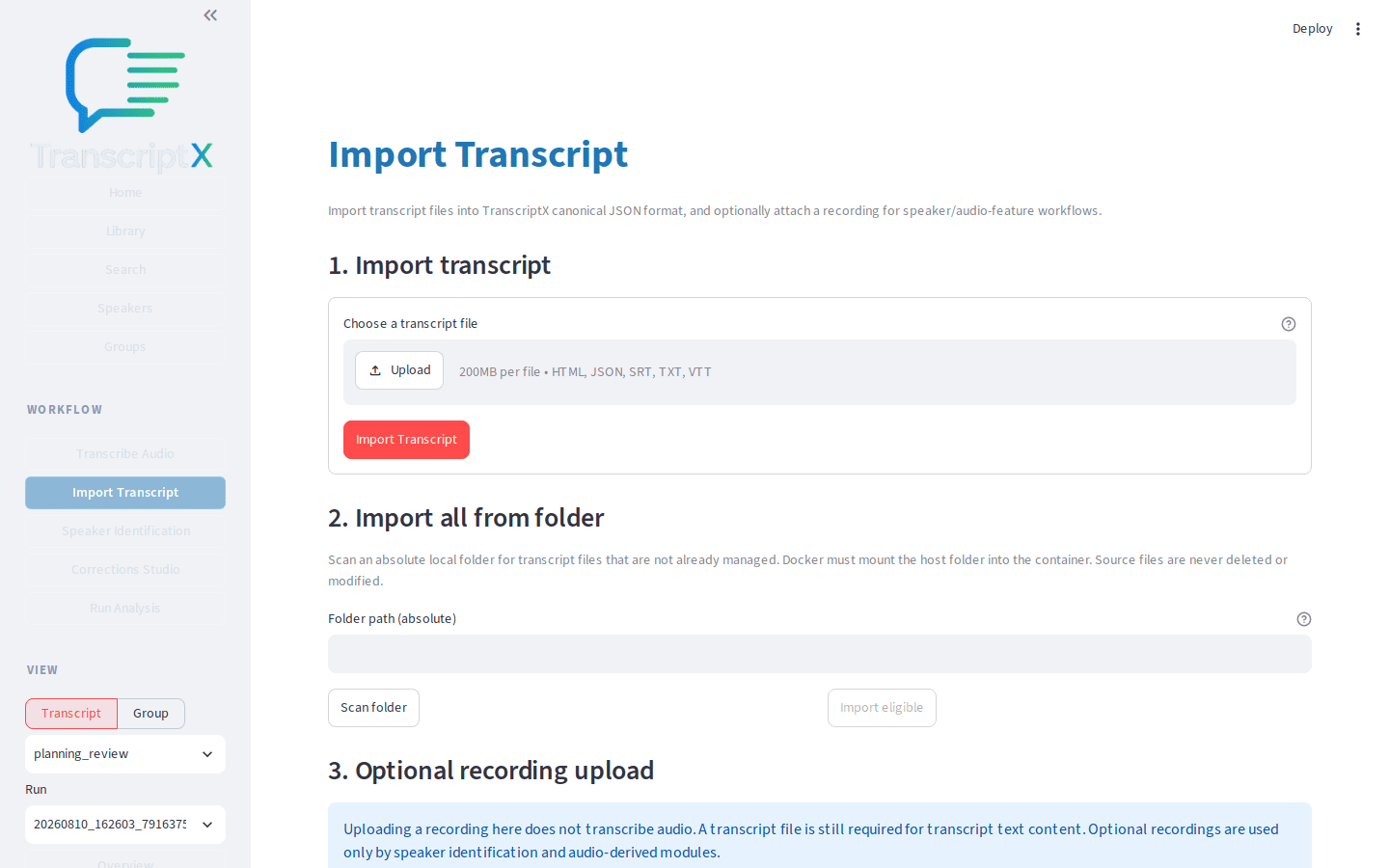
Open Import Transcript. Upload
planning_review.jsonand confirm the import. The library should list Launch planning review (docs walkthrough) (or the filename stem if the title is shown differently).
Open Library, select the new transcript in the table, then open Transcript. Skim a few turns so you know the cast uses diarized labels such as
SPEAKER_00. Most speaker-aware modules need human-readable names; if Overview looks sparse after the first run, complete Identify and name speakers and re-run.Open Run Analysis. Keep the target as Transcript and the analysis preset as Balanced (the default). Balanced runs a practical core set without requiring local AI for the non-LLM modules.
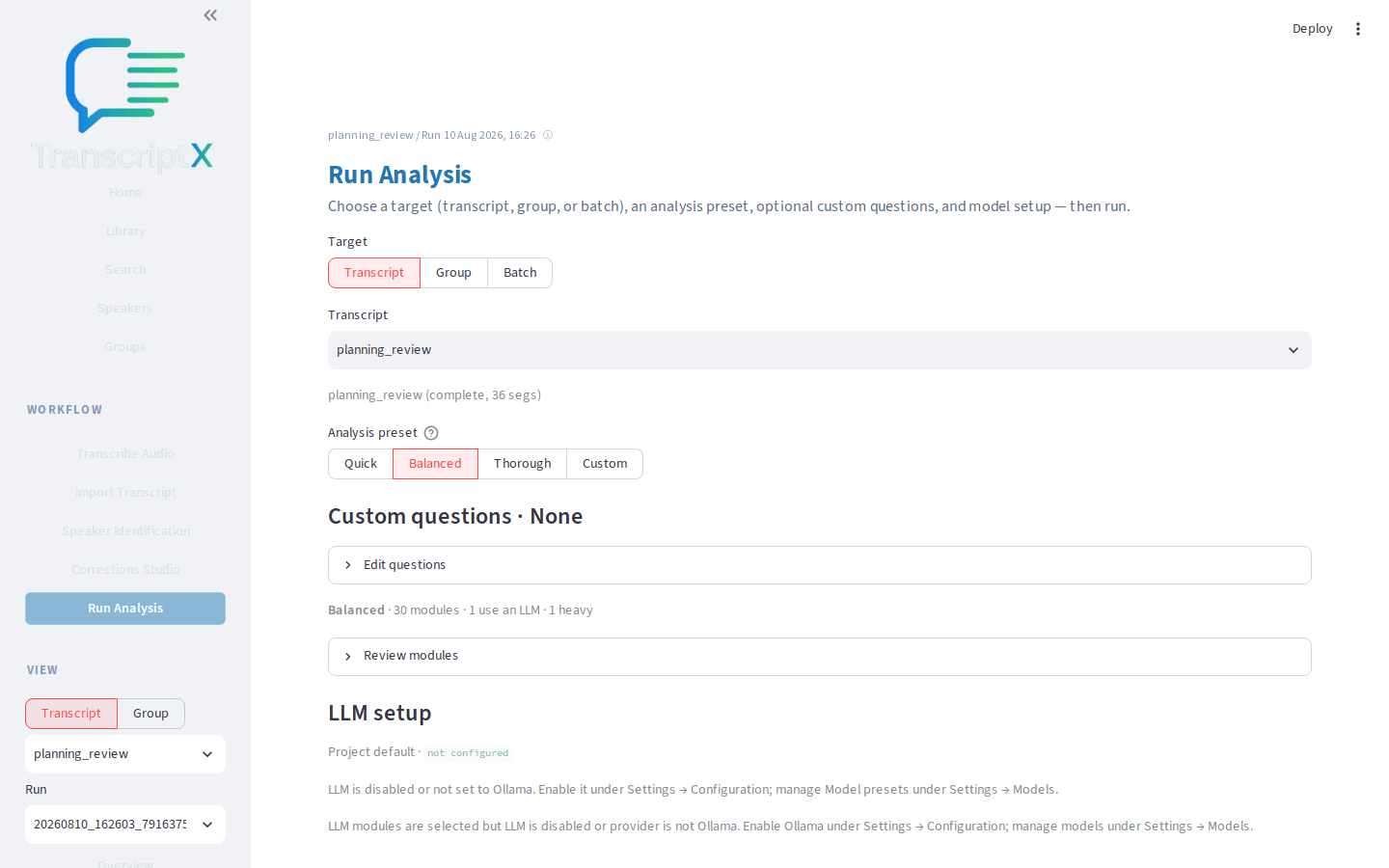
Choose Run analysis and wait until the progress panel reports completion. A success message naming the output folder appears when the run finishes.
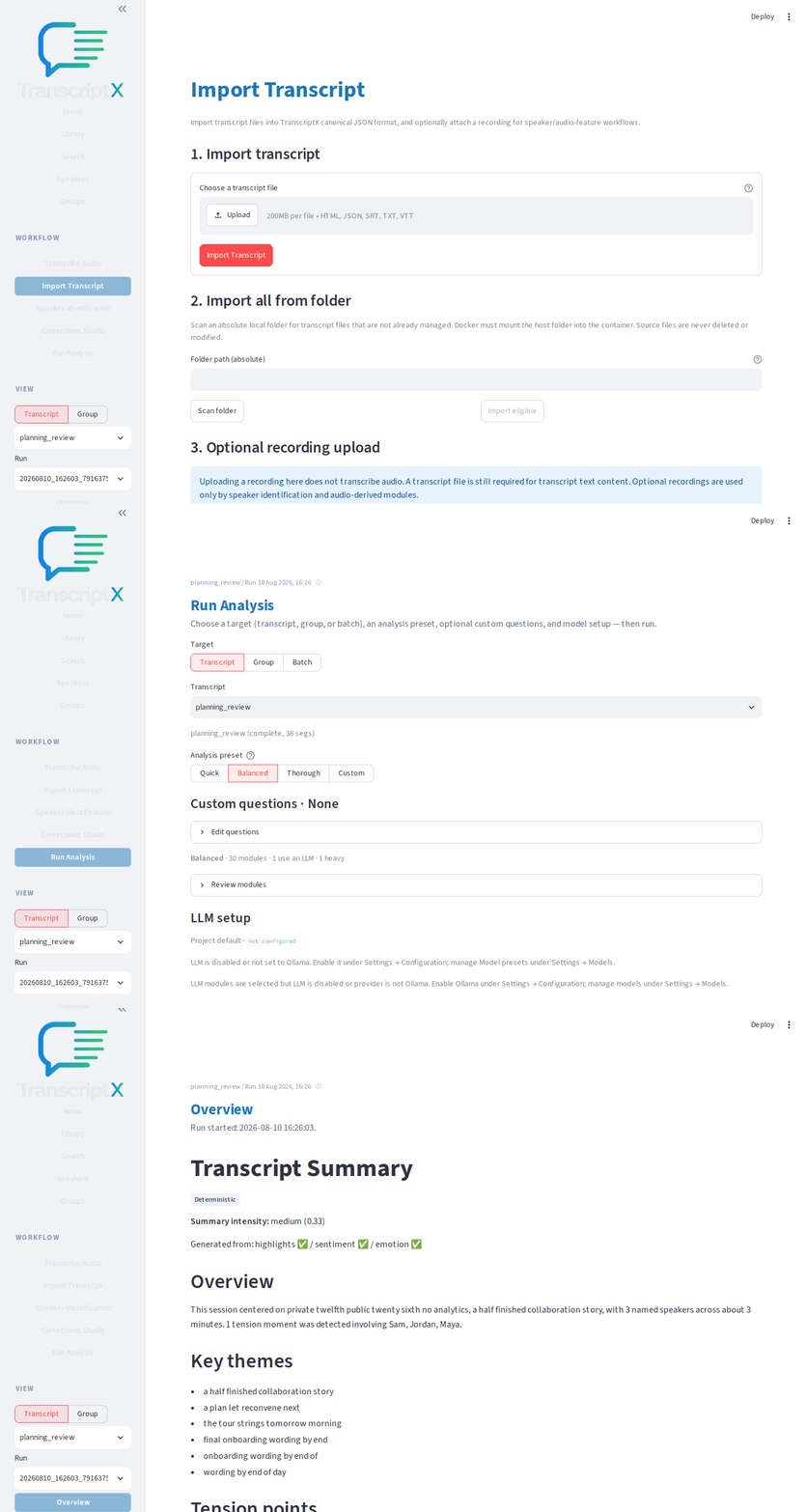
Open Overview for the selected transcript and run. Check At a glance, the speaker cards, and the compact highlights strip.
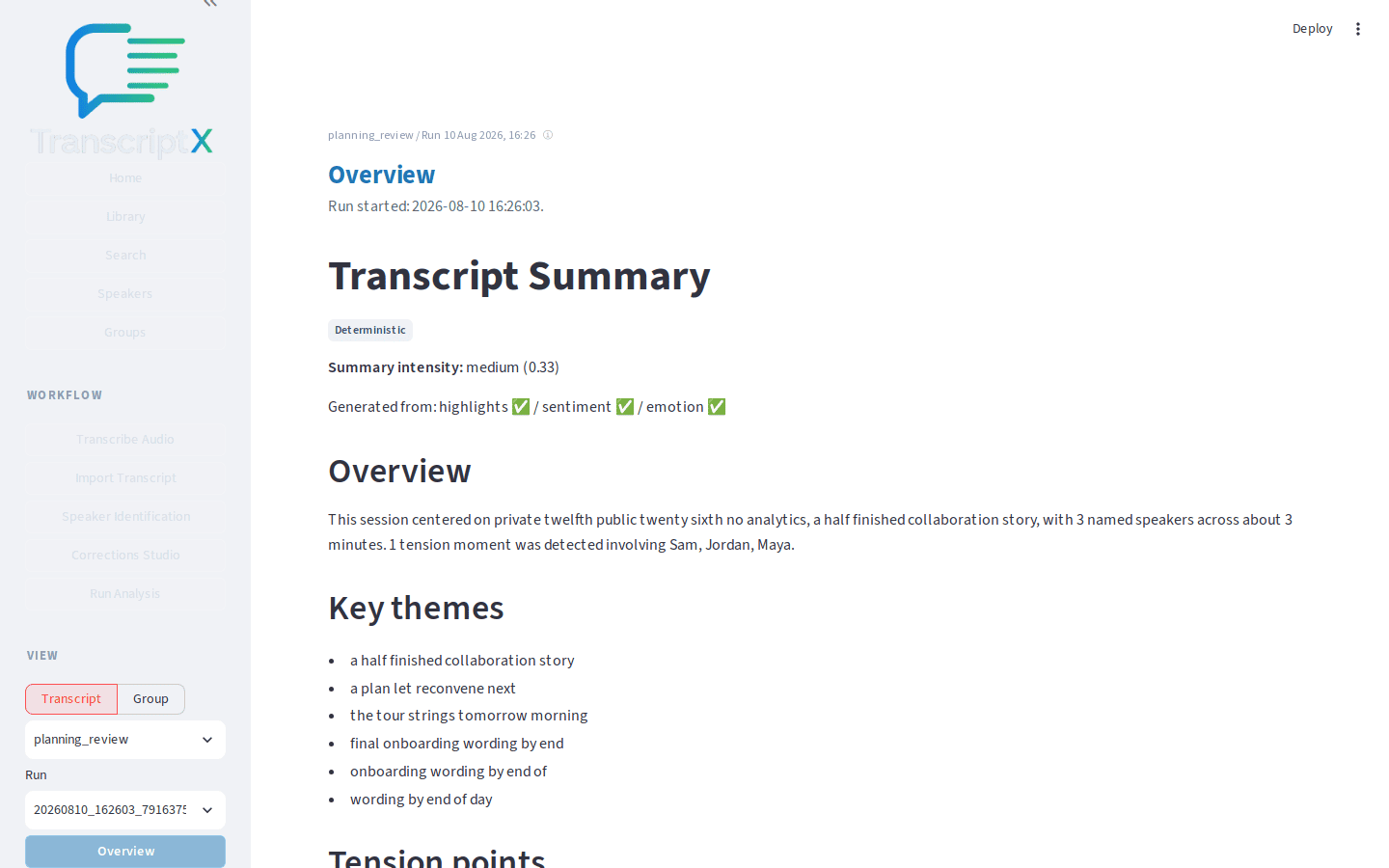
Pick two or three outputs that look useful for this meeting — for example a theme-related highlight, a speaker card, or run status. You do not need every panel yet.
From here, either improve speaker names (Speaker Identification) or dig into a specific question (Insights). Export can wait until you trust the results.
What to notice
Balanced is the recommended first preset: enough signal to explore, without Thorough’s full cost.
Overview is a landing surface, not the whole analysis. Deeper detail lives under Insights, Charts, and Transcript.
Diarized labels (
SPEAKER_00, …) are placeholders until you name speakers; many modules skip until names exist.Run status on Overview tells you whether modules completed, skipped, or failed — useful before you trust a blank panel.
You should now have…
An imported sample transcript, a completed Balanced run, and a mental map of Overview’s main blocks.
Next
Installation if the UI is not running yet